













37° 02' 54.6" N 112° 31' 36.3" W
Rumbling engines, hot desert, endless stretches of road. Nowhere is the American Dream as big and American as in the Southwestern United States. Against the queen of all backdrops, we’re seeking out the essence of what makes this place so magical. A journey where the boundaries between reality and illusion slowly but surely blur.
A Sunday morning in Los Angeles. Mark Escribano parks a white Dodge Challenger in front of the planet Mars. Red rocks can be seen, a blue moon suspended in space. Escribano sweeps the floor, then darkens the stage. “We can start as far as I’m concerned”, he says. “It looks amazing.”
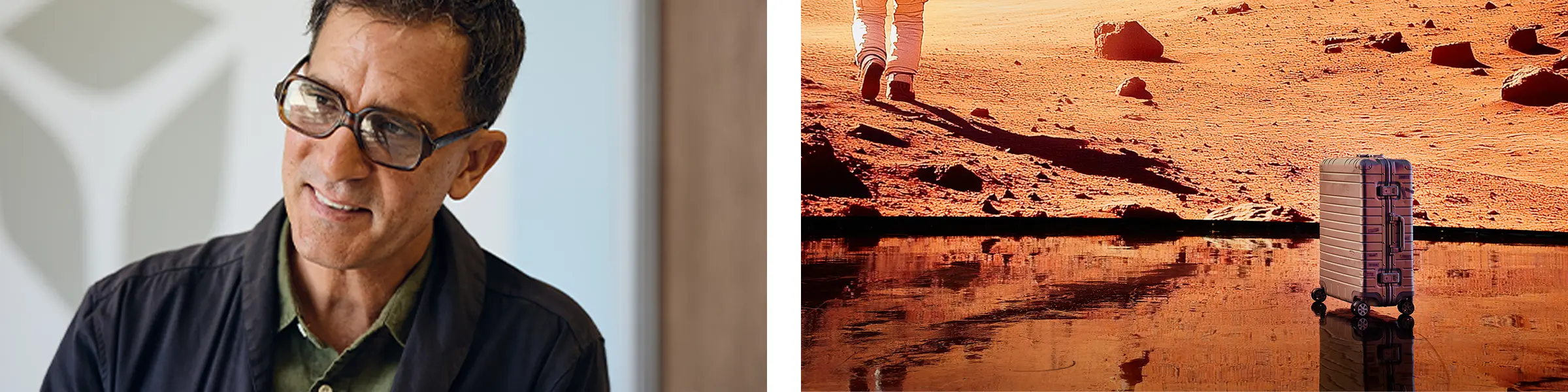
Escribano can make almost anything look amazing. Amazingly real, amazingly beautiful, amazingly sharp. The world as a backdrop, every conceivable environment a perfect illusion. Sometimes it’s ridiculously exaggerated, sometimes it’s AI-generated, sometimes it appears as a well-tempered reflection of reality. Escribano blends them all in.
Reality as a projection
Mark Escribano’s business is illusions. He is the executive producer of Standard Vision, an expert in LED volumes. They’re all the rage these days on the movie-making West Coast of the U.S.
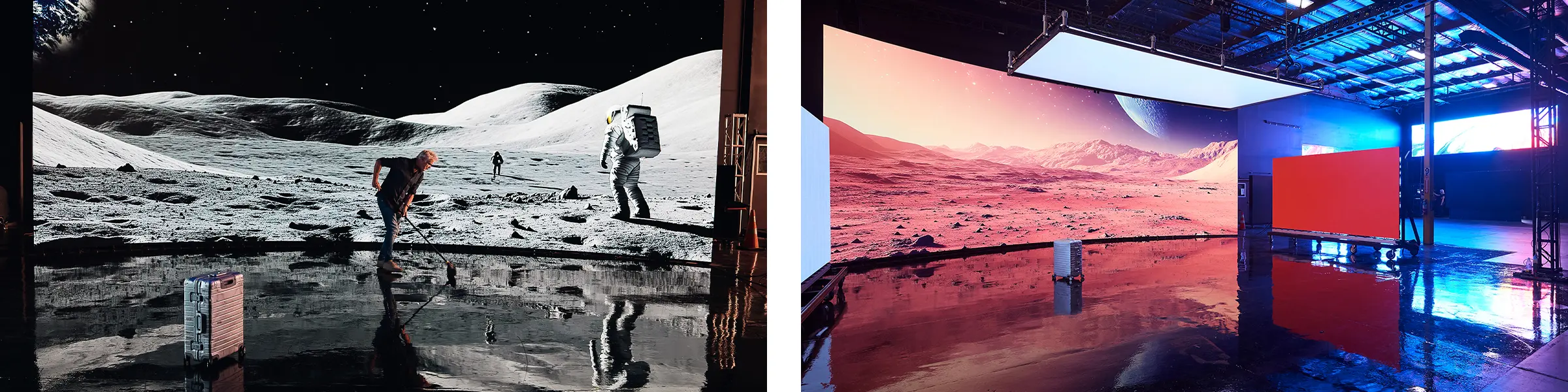
Stage building and time-consuming set design have given way to giant LED screens – projection surfaces for anything at all, as big as apartments. Virtual reality, augmented reality, extended reality, mixed reality – with the help of new technologies, environments are visually captured, digitally generated and modified as desired.
An illusion, perfectly sold
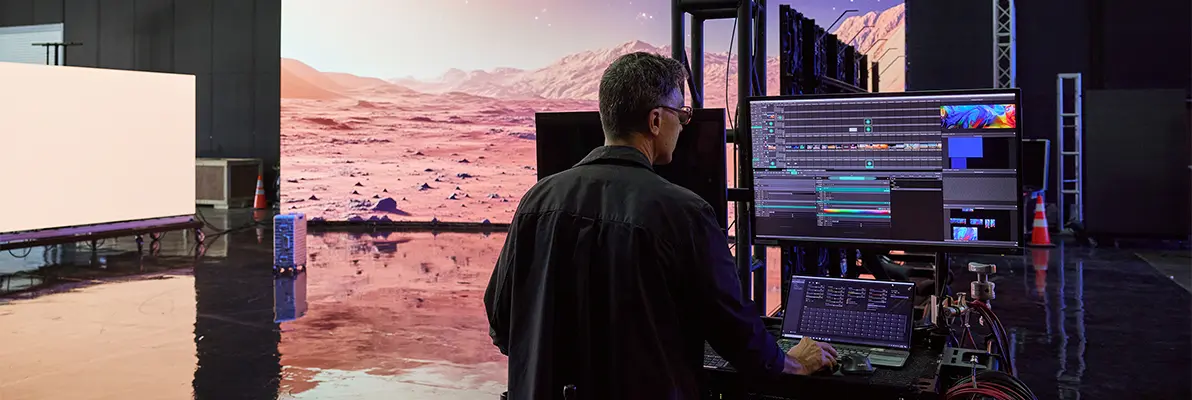
Today’s set design: oversized screens.
Escribano stands behind a computer, inputting the scenery. Mars casts a red light on his face, his nose, his glasses. Then he says the brilliant line, “It sells the illusion perfectly.”
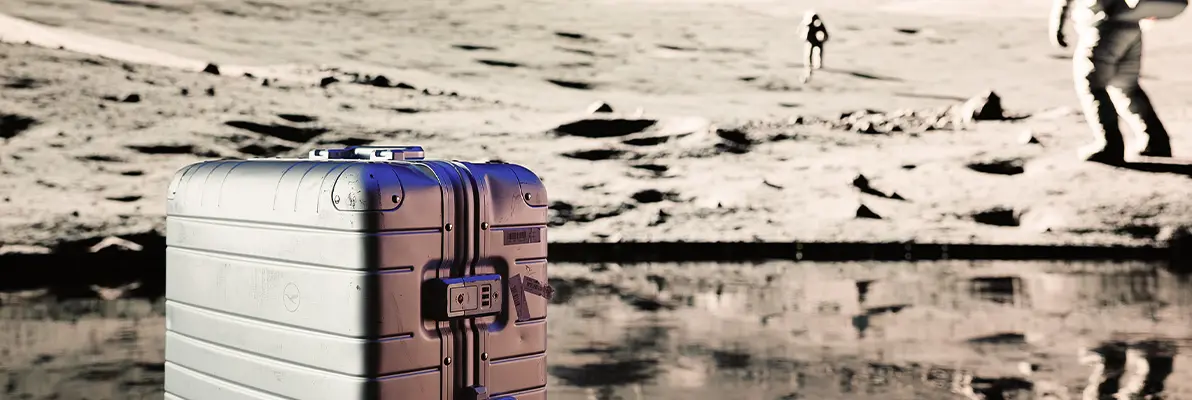
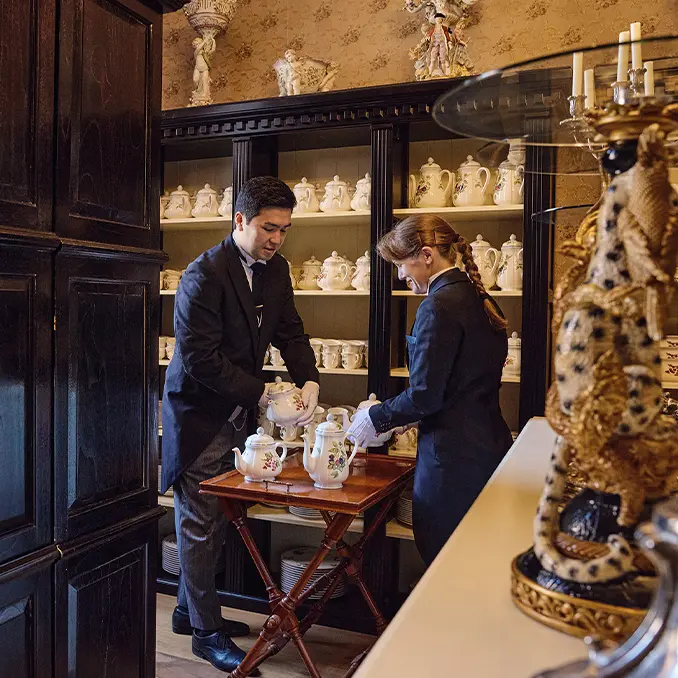
The Lufthansa Aluminium Collection on Mars – with new technologies, practically anything is possible.
An impeccable cinematic experience is what it’s all about. Productions take place here nearly every day. Film sequences, commercials, music videos. Cars speeding across the desert, refrigerators floating in space. You want it? You get it! The Black Crowes produced a video here, cult director Wes Anderson shot scenes at this studio..
There’s no business like show business
Playing with illusion and reality is the order of the day here in Los Angeles. What is and what appears to be merge into one. But, hey: “There’s no business like show business!”
That’s something they certainly know about in the American Southwest. Nowhere is the American Dream more American than here. Nowhere is the sky wider, nor does the land stretch out more extravagantly beneath white clouds. Rumbling engines, endless stretches of road.
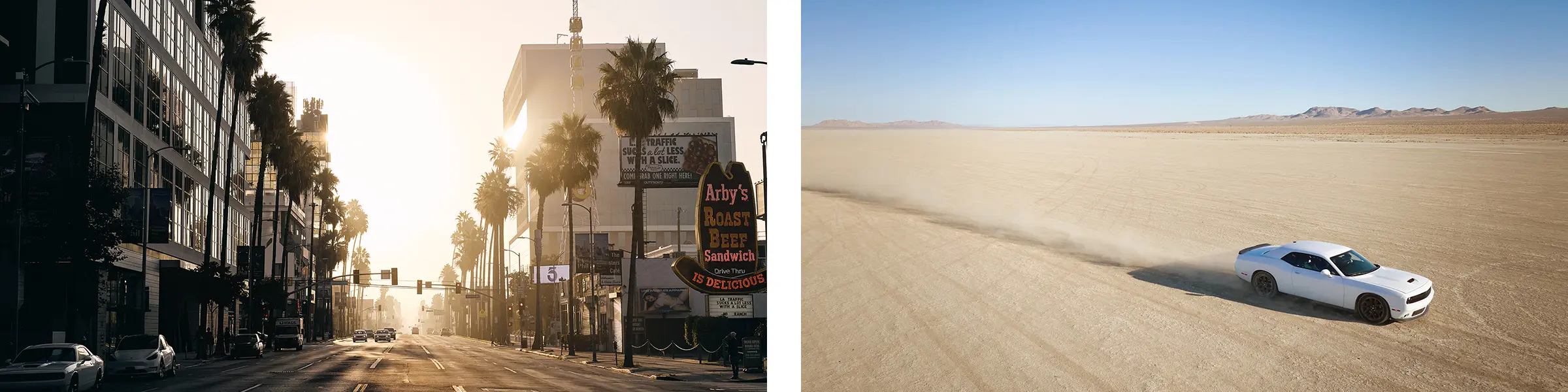
The soundtrack of a legend, a feeling
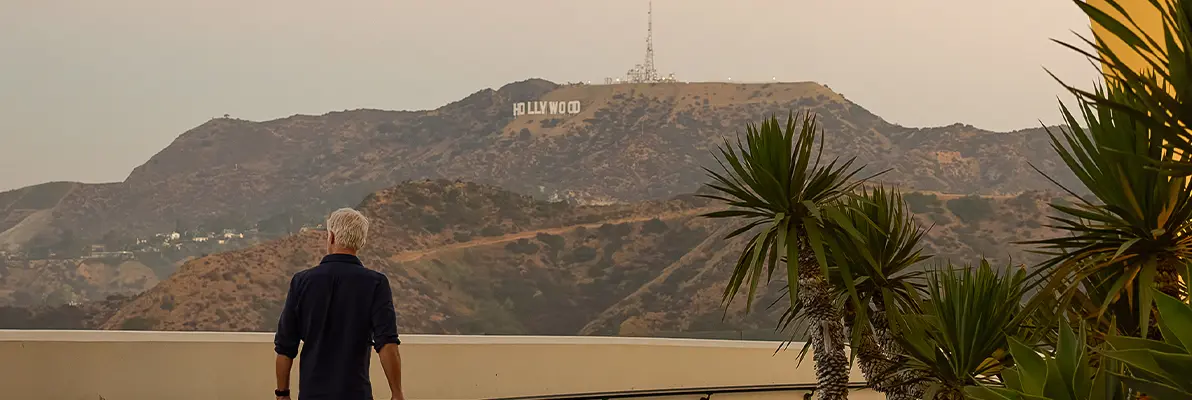
Hollywood, the dream factory, has lost none of its magical appeal to this day.
The American Southwest is the mother of clichés, the queen of all backdrops. The world’s most cinematic landscape has shaped our dreams. Where, if not here, is our concept of unfettered freedom so boundless? And ringing in our ears, the soundtrack: “Life’s a road movie, honey!”
All that remains is to jump into a car and hit the accelerator yourself. Your windscreen will soon morph into a movie screen. Mile-long freight trains thunder across the prairie, silver trucks packed with cattle traverse the cactus-studded wastelands between the Colorado River and Death Valley
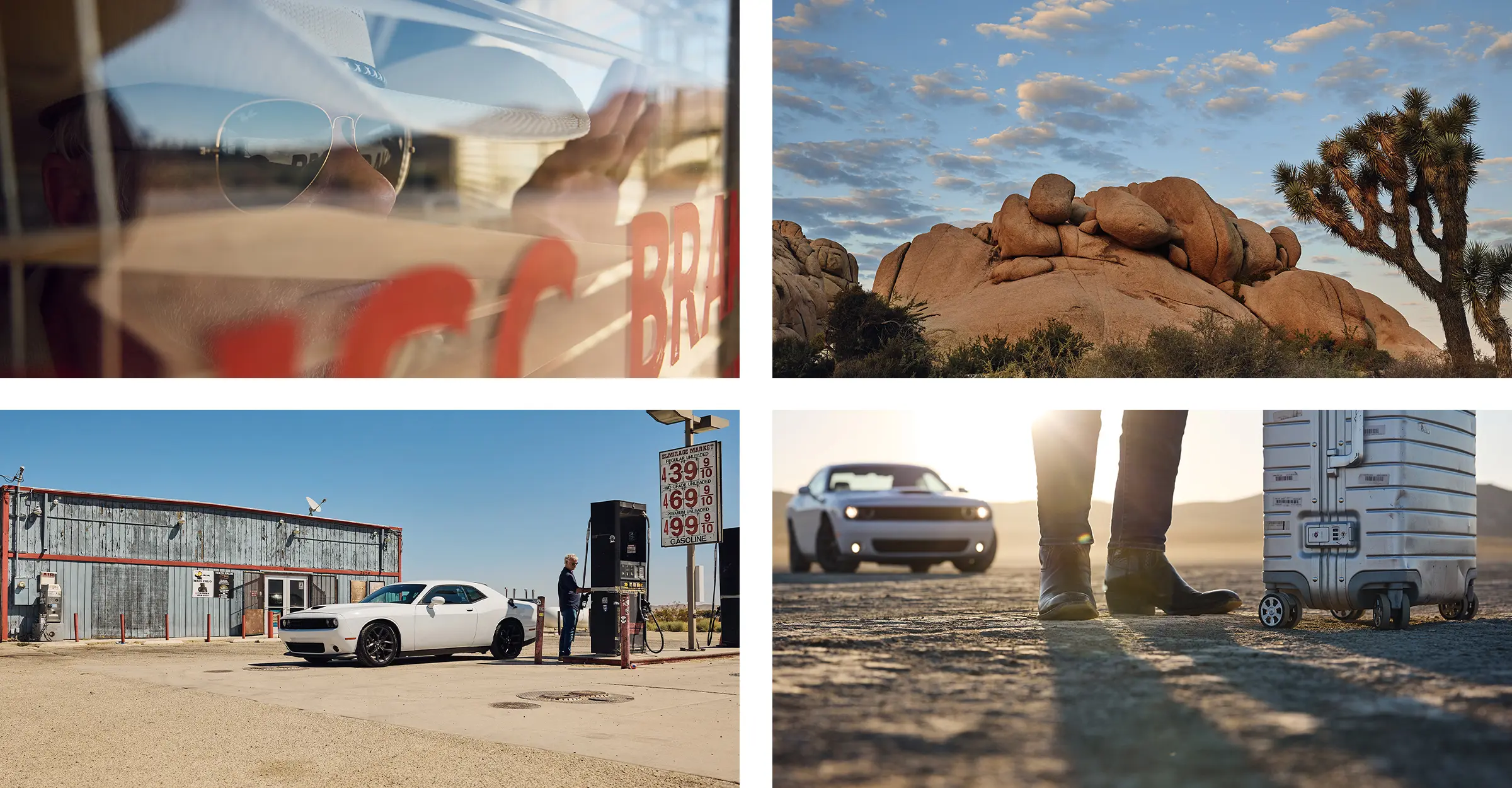
Casinos jingle in the middle of the desert, cowgirls dance. You spot petrol stations with a hundred pumps. The real world has also been a blueprint for countless fantasies. Augmenting it was hardly necessary. Its sheer presence is enough to make the most remarkable stories burst out of the ground.
A downright absurd background
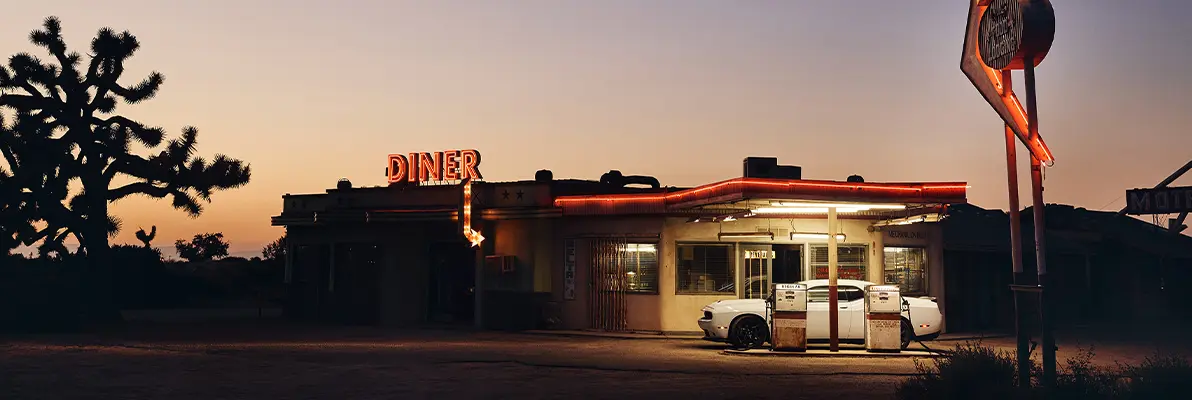
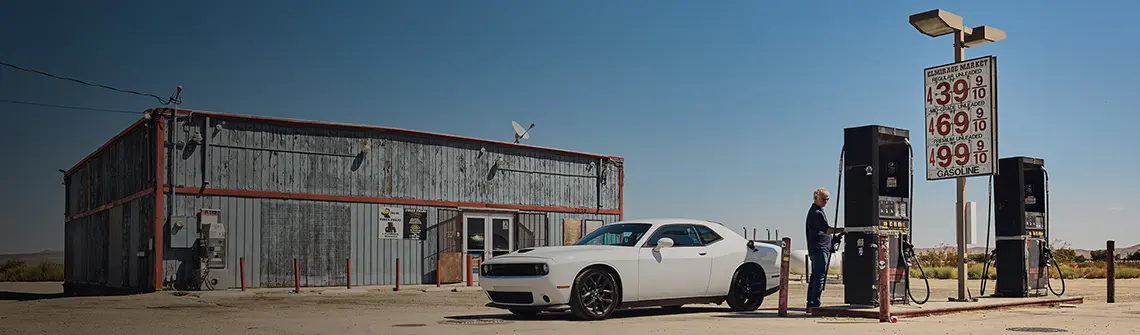
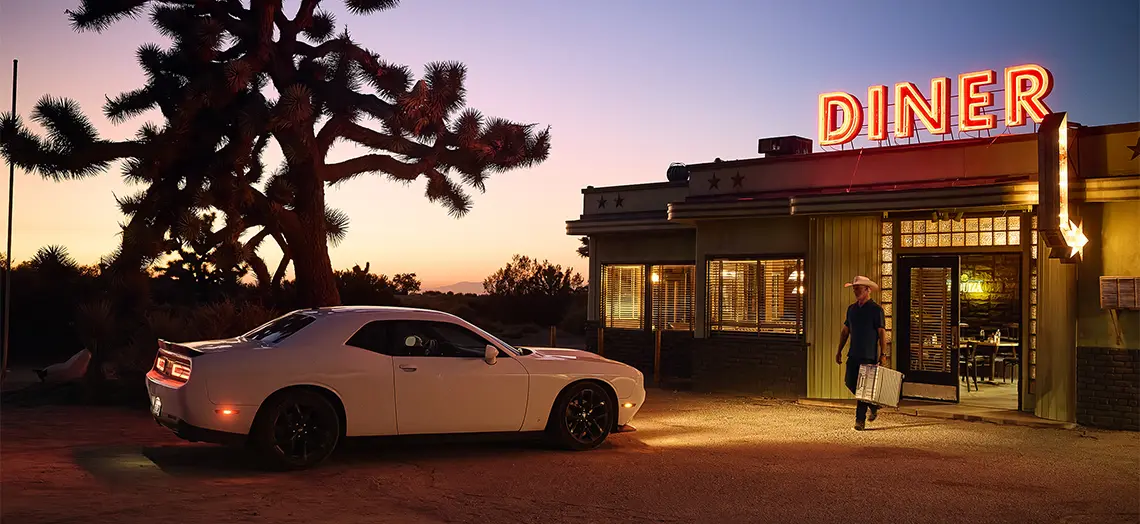
Diner, petrol station, desert vibes: all the ingredients for an epic setting.
Who hasn’t been up to all kinds of adventure here? Buffalo Bill, Easy Rider, Indiana Jones. John Wayne and James Dean, Hopper and Tarantino: they all came and succumbed to this set. A downright absurd backdrop where 300-million-year-old mesas alternate with the glowing neon signs of desert motels.
The country itself has become a backdrop, a cliché at every crossroad, just to drive the point home. Every trip into this part of the world inevitably becomes a cinematic experience.
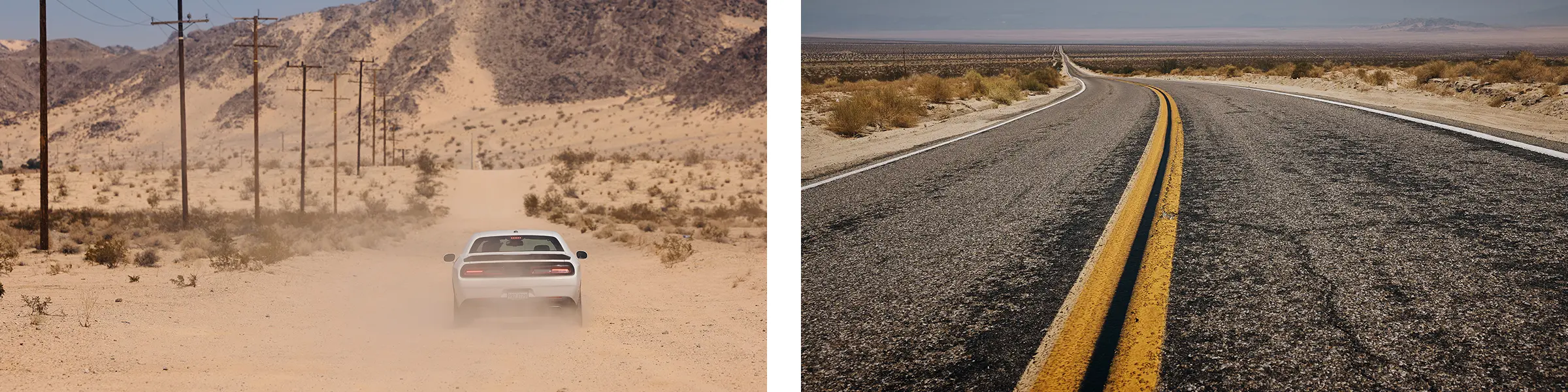
Surreal yet real
You keep driving. The road stretches toward the horizon like the barrel of a gun. Here and there in the desert, you spot an oil drum, an old camper, an aeroplane wreck. You fly past dusty mailboxes. Vultures circle.
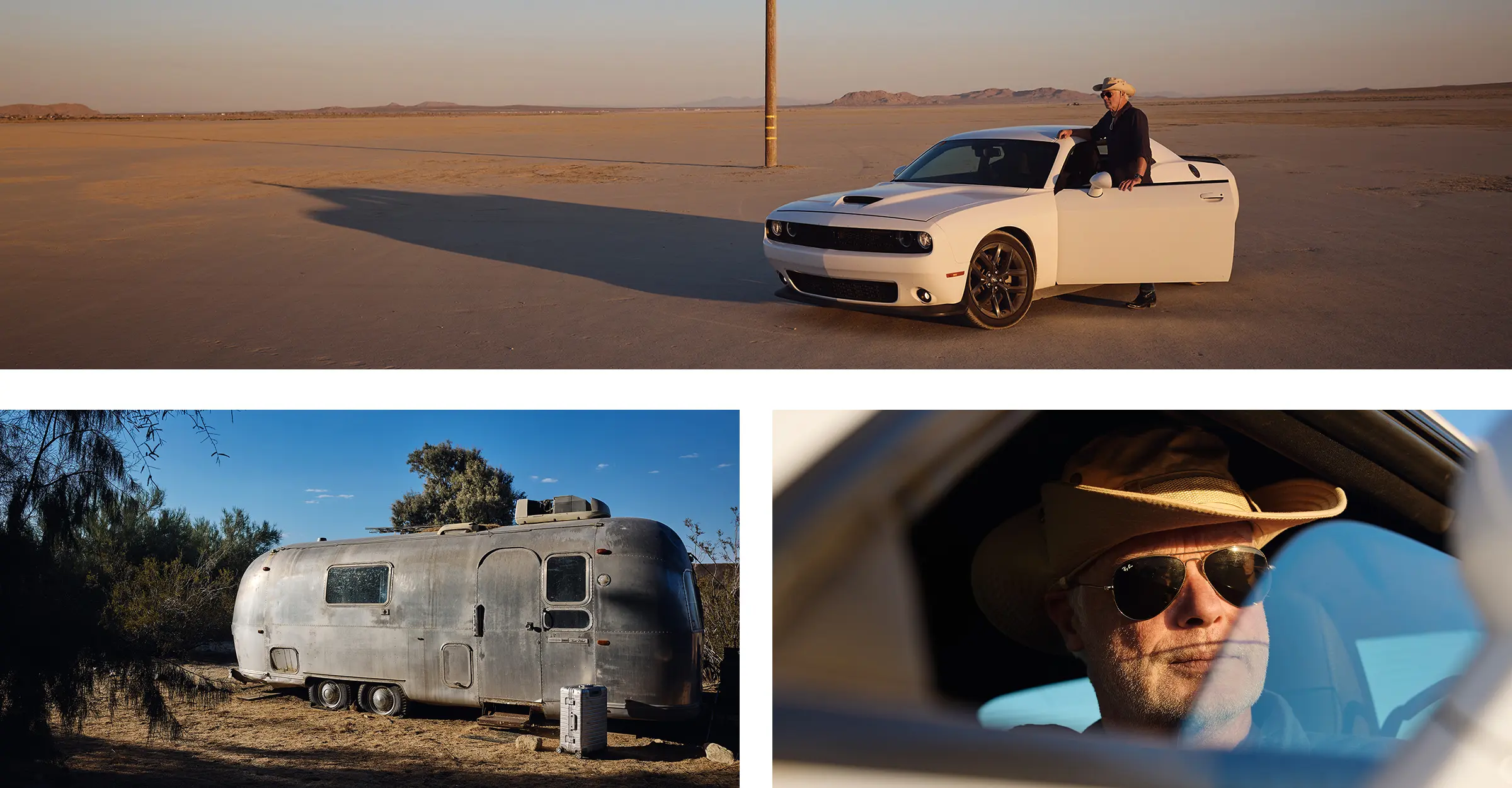
Ahead of your windscreen, more mountains. Orange-coloured evaporites, arches of sun-washed sandstone. You’ve seen it all before, you think. The Chihuahua Desert, Great Basin, Mojave, Sonora. Everything shimmers in the heat; the air is bone dry.
Then it clicks: you’ve never been here, but you’ve been a hundred times. In films. Scenes flit through your mind. The Man Who Shot Liberty Valance. No Country for Old Men.
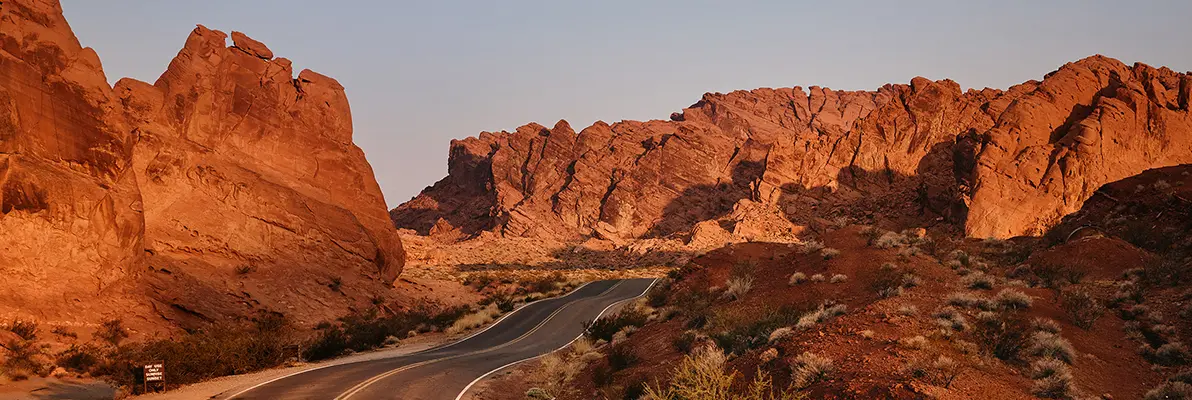
How did such a truly inhospitable patch of land come to symbolise boundless freedom?
And then: the images begin to overlap, the false, the real. Great camera work. You forget you’re sitting in a car, you think you’re at the cinema.
Made in Germany: a major player in the movie industry
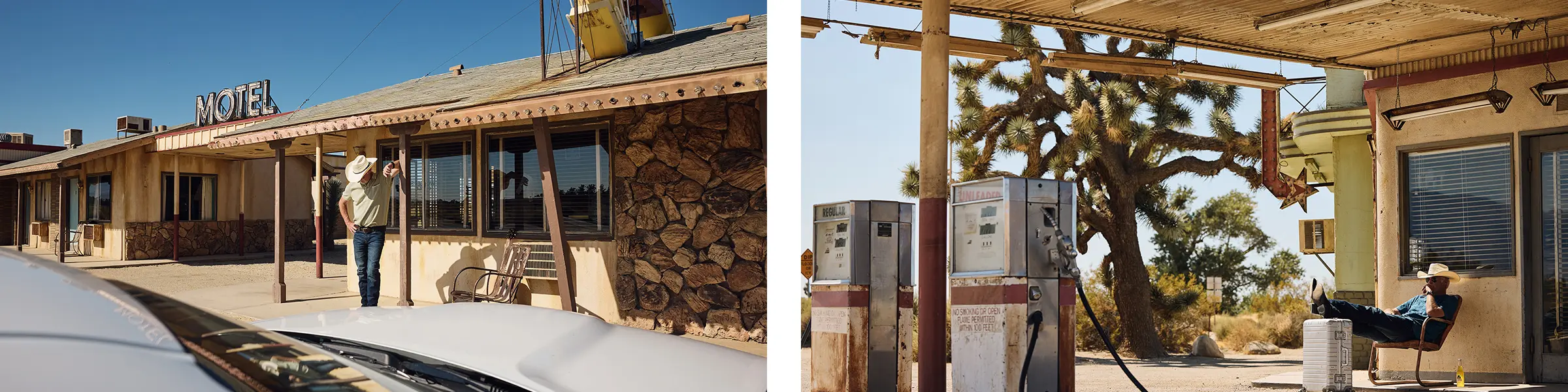
In Antelope Valley, a motel suddenly appears. A petrol station, a diner. Neon flickers, an American flag flies. A green convertible is parked in the lot beside a 1965 Mustang. The motel has a 1950s look, you expect James Dean to appear around the corner.
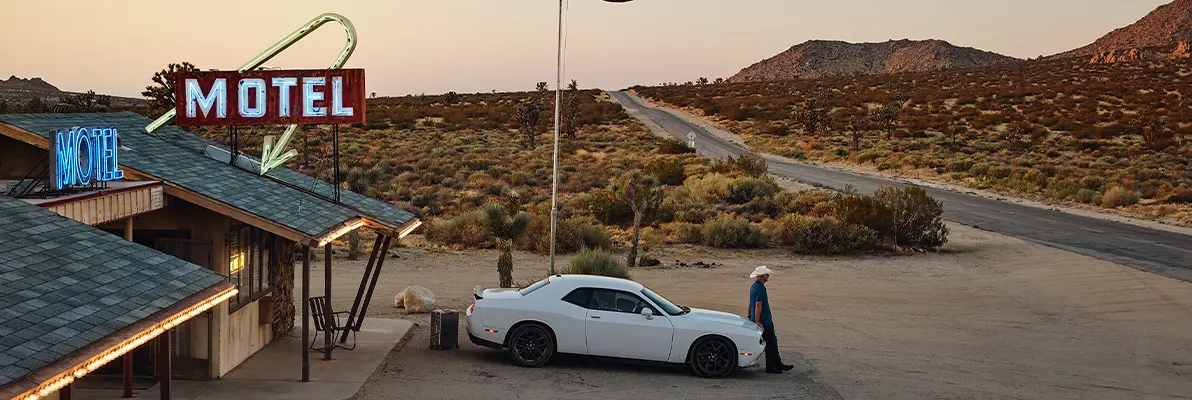
A stop at the next motel, and there it is again – that “I’m sure I’ve seen this before” feeling.
But instead, you meet Jan-Peter Flack, the German owner of the Four Aces Movie Ranch. Lady Gaga and Britney Spears have made music videos here, and Clint Eastwood directed here. Flack’s reconstructed motel, bar and diner look deceptively real. You feel like you’ve stepped into an Edward Hopper painting.
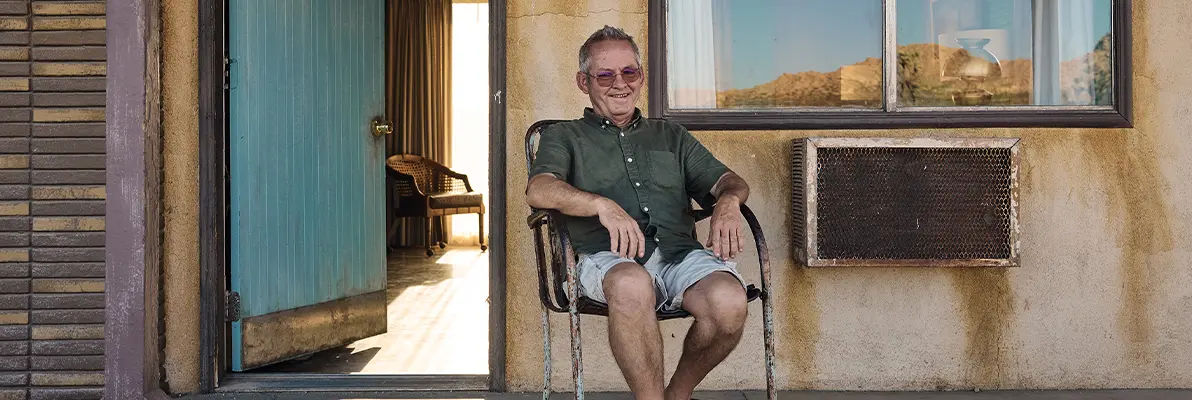
Rusty chairs, dramatic lighting – nothing is left to chance on Jan-Peter Flack’s film set.
“A good backdrop has to be perfect”, says Flack. “The design, the light, the shadow. The rusty sign banging in the wind. In the end, a backdrop has to be more true than reality. And then: bingo!”
The American West has you in its thrall – literally. You’ve got a Cody James on your head and black cowboy boots on the accelerator. You can’t help yourself; the stereotype is too strong. The illusion, the desire for stories.
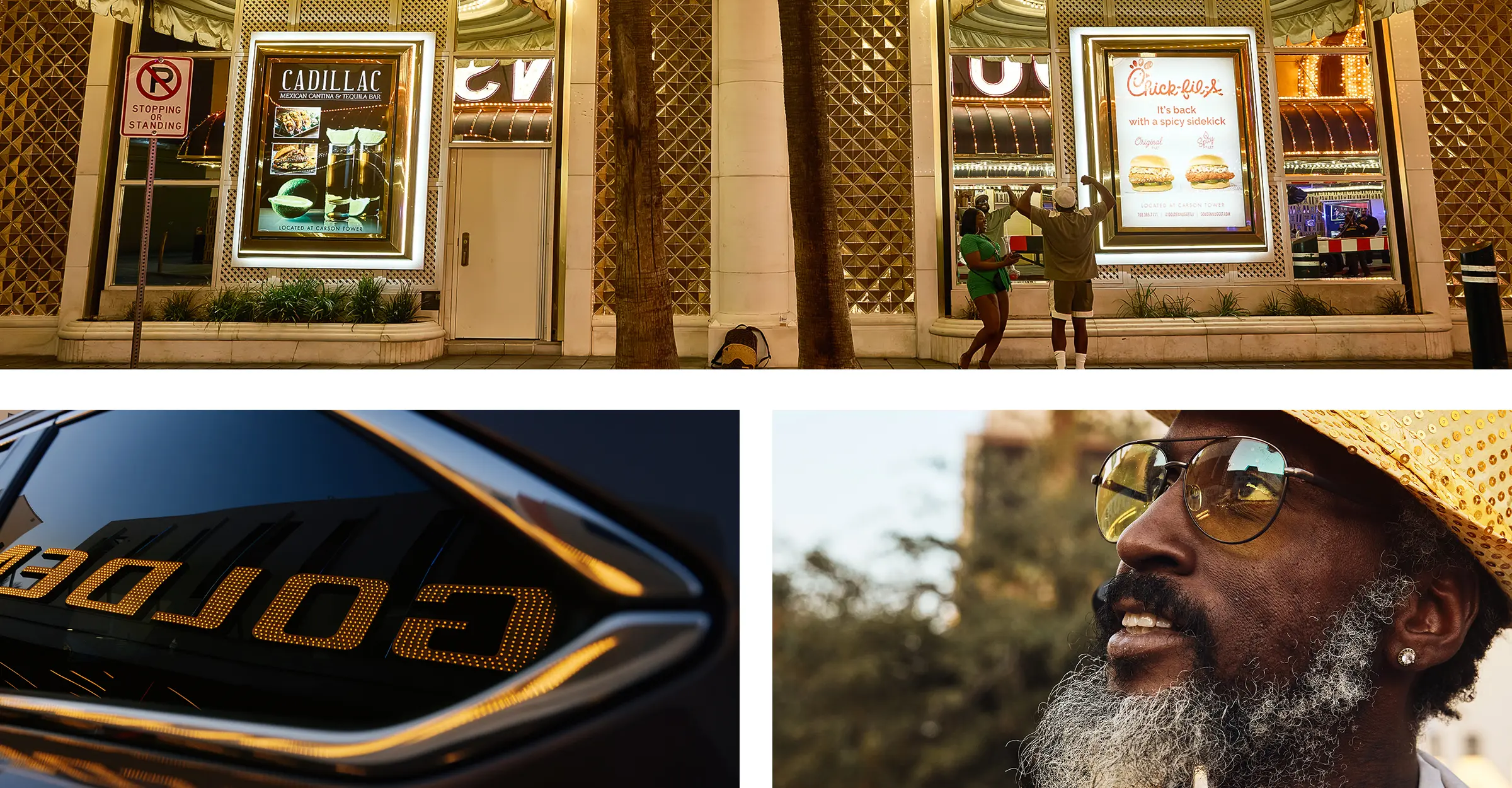
Casinos, laser billboards and the super-rich in Las Vegas
You race through Nevada, flat as a board beneath a broad sky. Casinos appear, the first water slides in the desert. Very soon, Vegas shimmers on the horizon, its pyramids taller than the Egyptian originals. Fountains dance to Verdi in front of the hotels.
Backdrop wizardry? No, Vegas in 2024. An overstated overstatement, a superlative superlative. That’s the American West as well. Spectacle as revelation. Fake as a statement.
Why here of all places, in an environment that is so hostile to life?
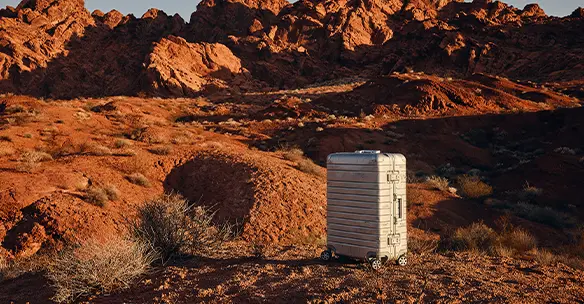
You whiz through the Valley of Fire, where the mountains appear to smoulder in the blazing sunset. The realm of lizards and scorpions. A land without trees, without gardens, without oases. And yet this is the place we humans chose to establish the most audacious iteration of pop culture we could imagine.
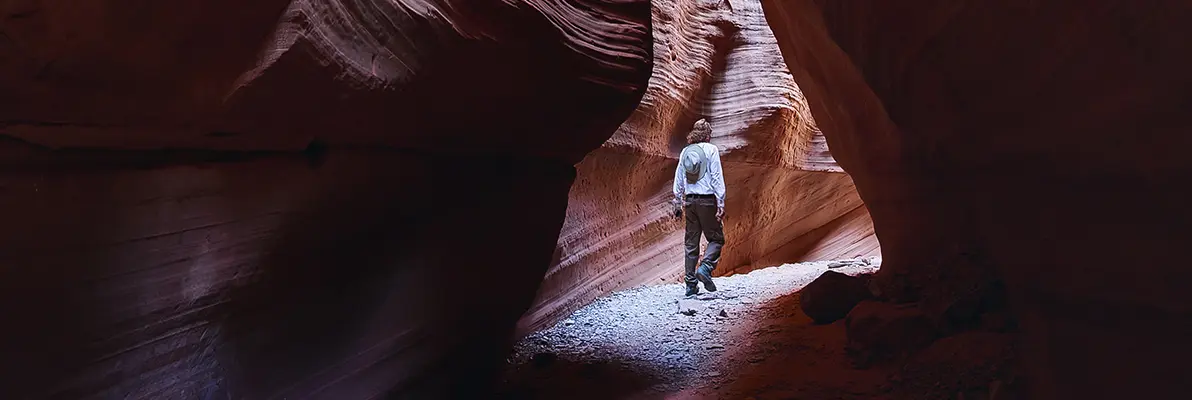
Wider, bigger, more surreal. In the American Southwest, even your sense of scale and reality becomes blurred.
This is where chancers hustle and desperados ride, where cowboys romp and Harleys roar – in a harsh natural setting. The plot is irresistible. Take one of the planet’s most hostile environments and turn it into a playground for money-grubbers and freedom-seekers addicted to petrol.
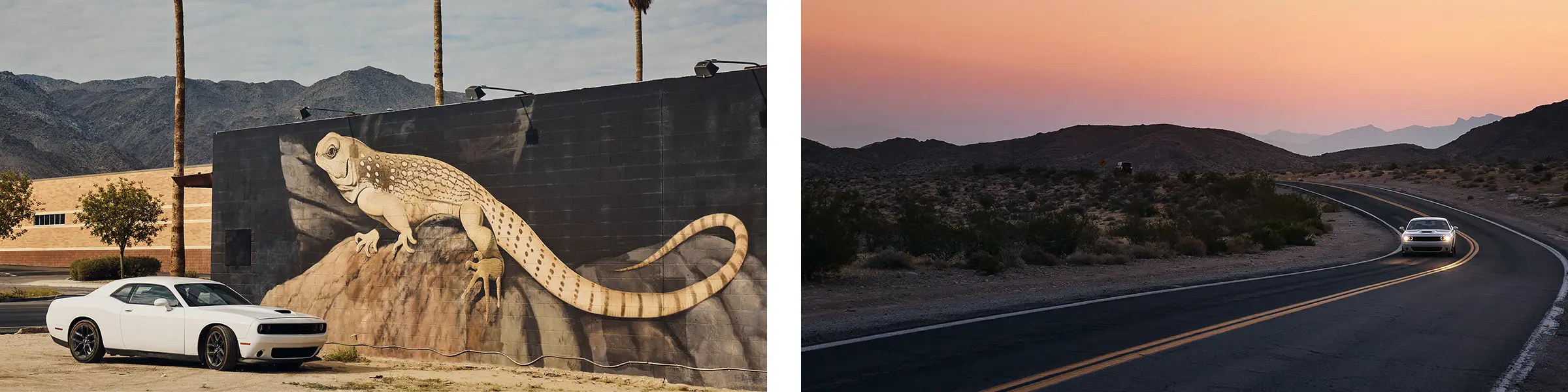
Ultimately, it’s a modern interpretation of the age-old motif of humans in nature. Out here, the story has been taken to extremes; the stuff of incredible cinema. The magic of the American West – Coca-Cola in the desert, rock ’n’ roll in no man’s land.