














13° 43' 35.4" N 100° 30' 40.0" E
It’s not easy to grasp Bangkok’s dimensions, and this starts with its full name. At 23 words, it is the longest name ever given to a city, which has secured it a place in the Guinness Book of Records. Translated into English, the name goes something like this: ‘the city of angels, great city of immortals, magnificent city of the nine gems, seat of the king, city of royal palaces’. And all of that is said more or less in one breath.
But the principle of overabundance is not just rooted in the city’s name. Bangkok is Thailand’s largest urban agglomeration and one of Asia’s most colossal living spaces. The Thai capital sprawls over 1,600 square kilometres, nearly double the area of Berlin. Since the 1960s, the city centre has virtually exploded, swallowing up two neighbouring provinces and forcing municipal planners to create one master plan after the next in an effort to bring Bangkok’s growth under control.
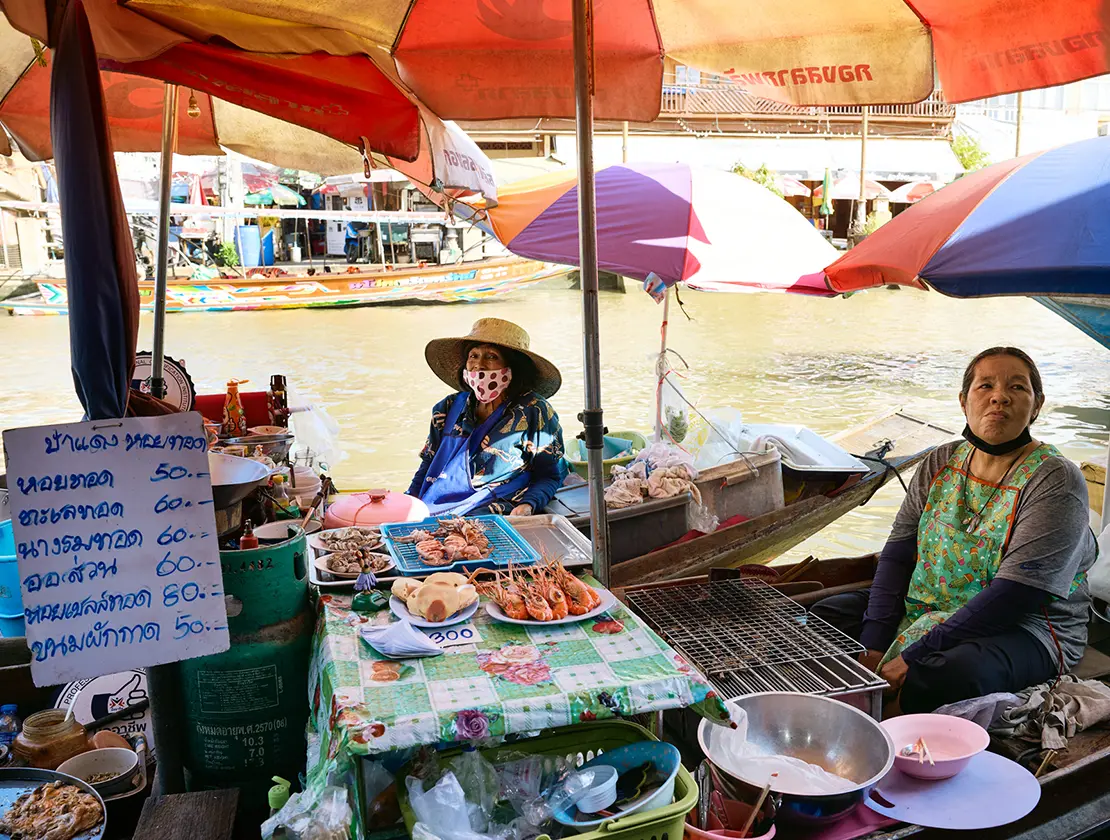
Nearly 1,700 canals criss-cross the city, with an aggregate length of 2,600 kilometres. They’re populated too – by floating markets, floating houses, floating restaurants. The city’s resourceful residents make use of every square metre. Today, roughly 11 million people live in the city proper, whereas the metropolitan region is home to around 16 million.
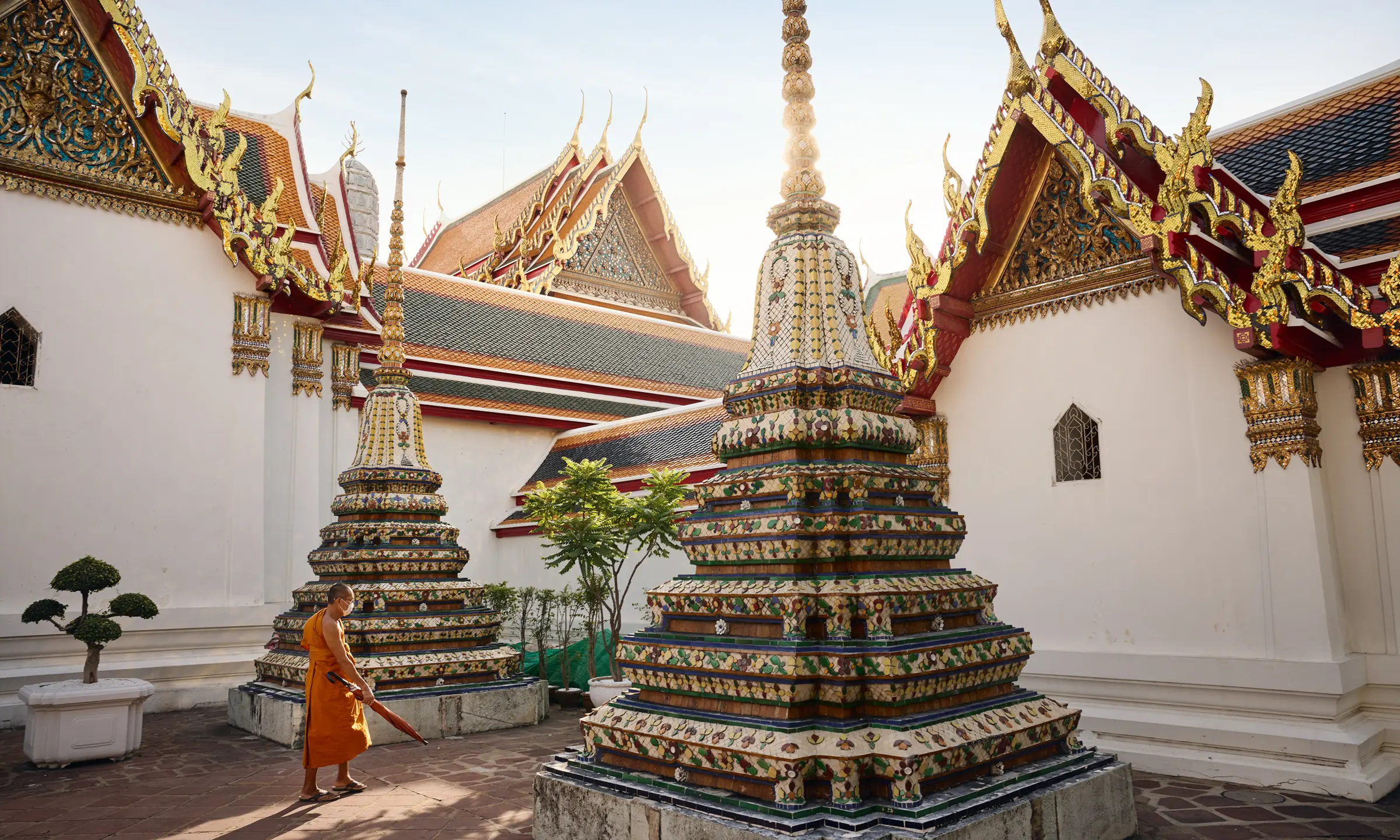
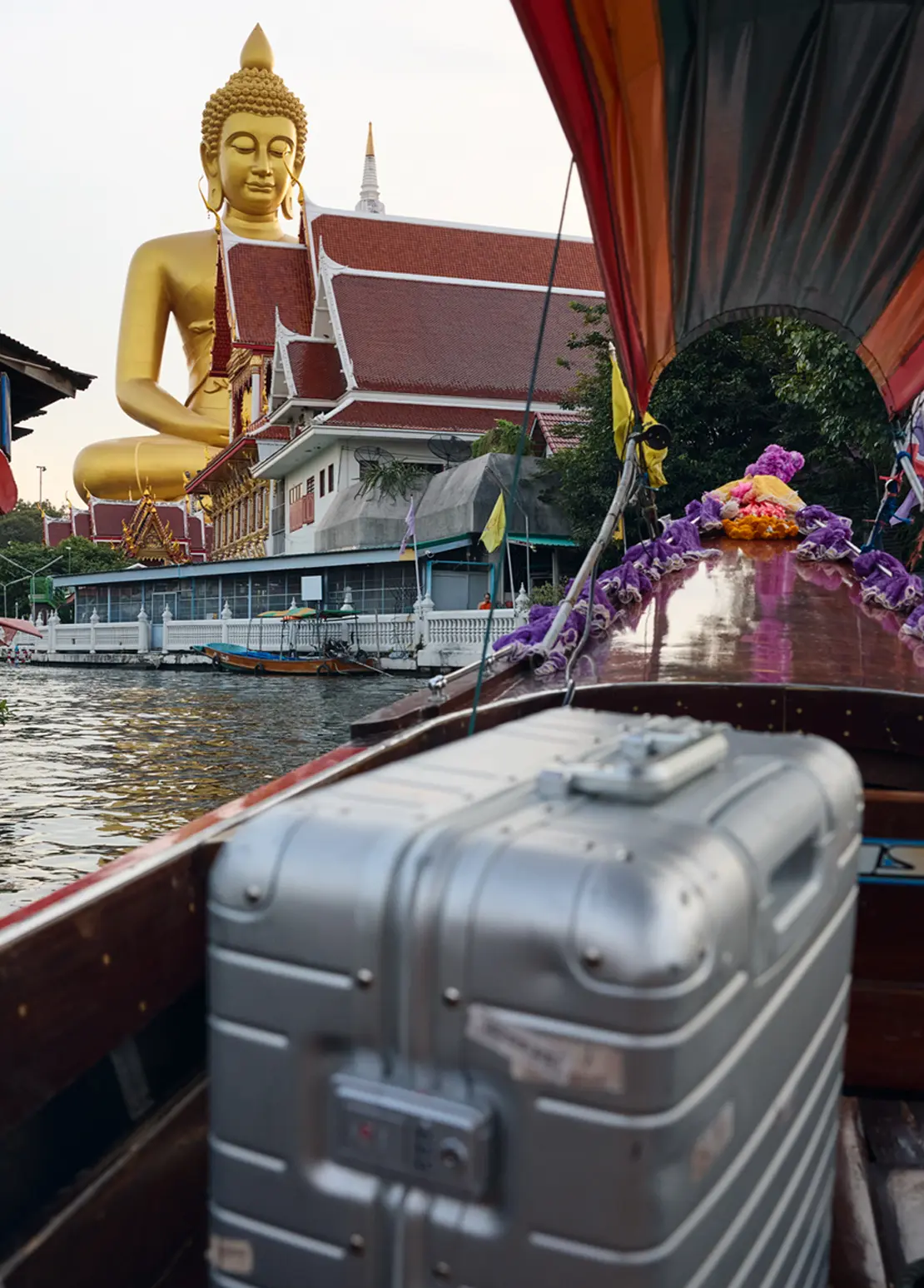
There are close to 400 temples, so-called wats, dotted around the city, and visitors from across the globe have a choice of 300,000 hotel rooms in which to spend the night. The number of shopping malls and noodle shops is virtually endless, that of street food stands and massage salons impossible to guess.
But the principle of overabundance is not just rooted in the city’s name. Bangkok is Thailand’s largest urban agglomeration and one of Asia’s most colossal living spaces. The Thai capital sprawls over 1,600 square kilometres, nearly double the area of Berlin. Since the 1960s, the city centre has virtually exploded, swallowing up two neighbouring provinces and forcing municipal planners to create one master plan after the next in an effort to bring Bangkok’s growth under control.
Nearly 1,700 canals criss-cross the city, with an aggregate length of 2,600 kilometres. They’re populated too – by floating markets, floating houses, floating restaurants. The city’s resourceful residents make use of every square metre. Today, roughly 11 million people live in the city proper, whereas the metropolitan region is home to around 16 million.
There are close to 400 temples, so-called wats, dotted around the city, and visitors from across the globe have a choice of 300,000 hotel rooms in which to spend the night. The number of shopping malls and noodle shops is virtually endless, that of street food stands and massage salons impossible to guess.
There’s nothing in Bangkok you can’t buy in every colour, size and shape.
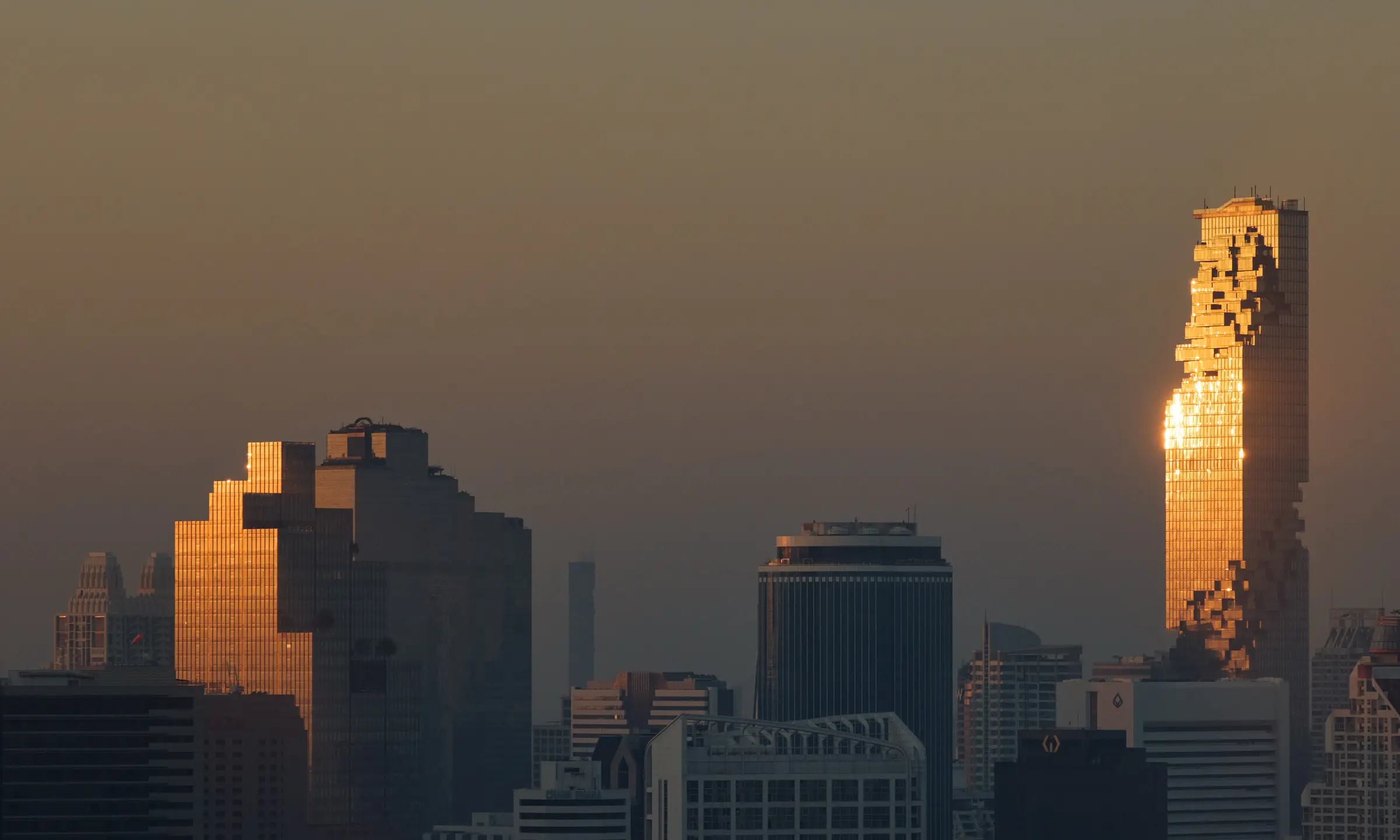
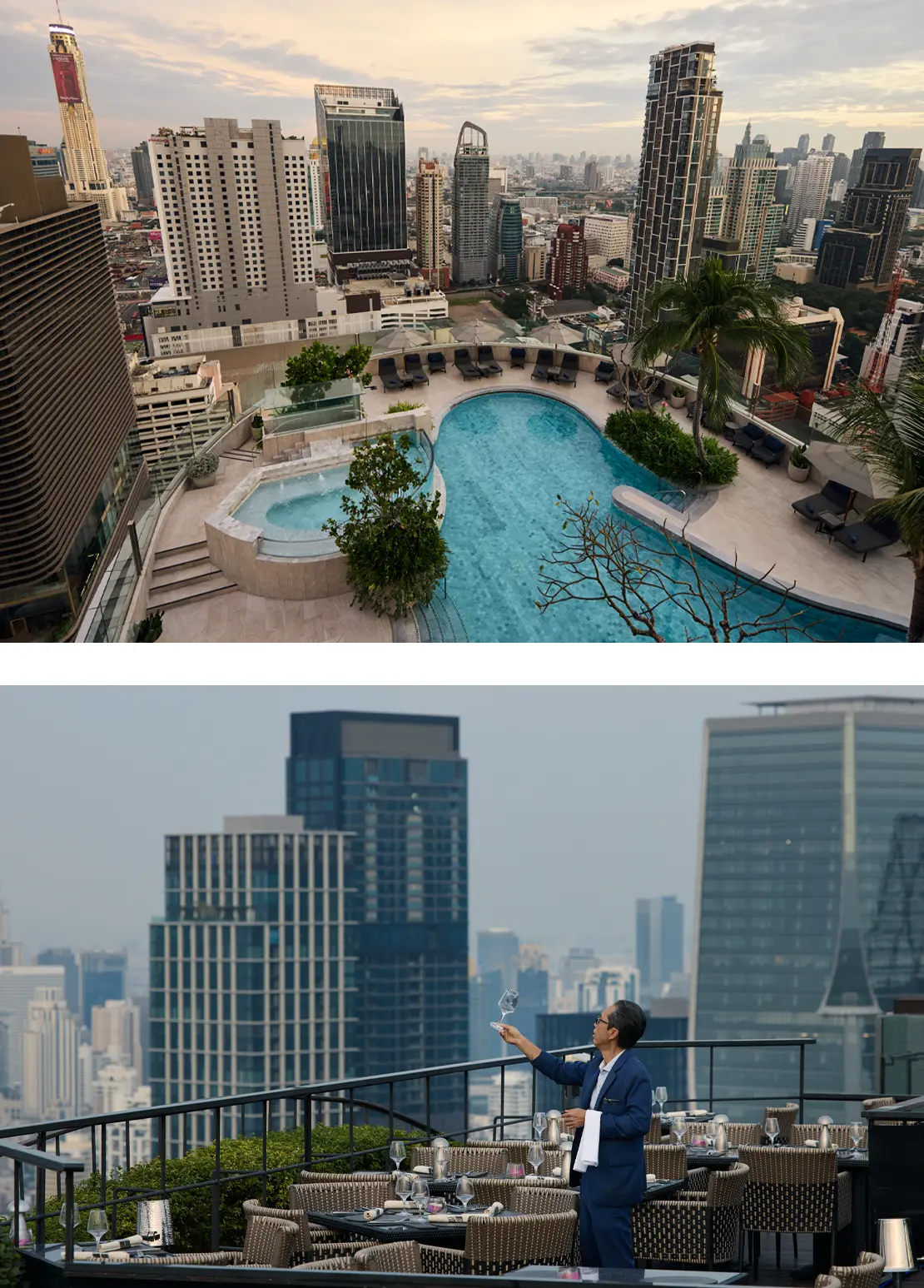
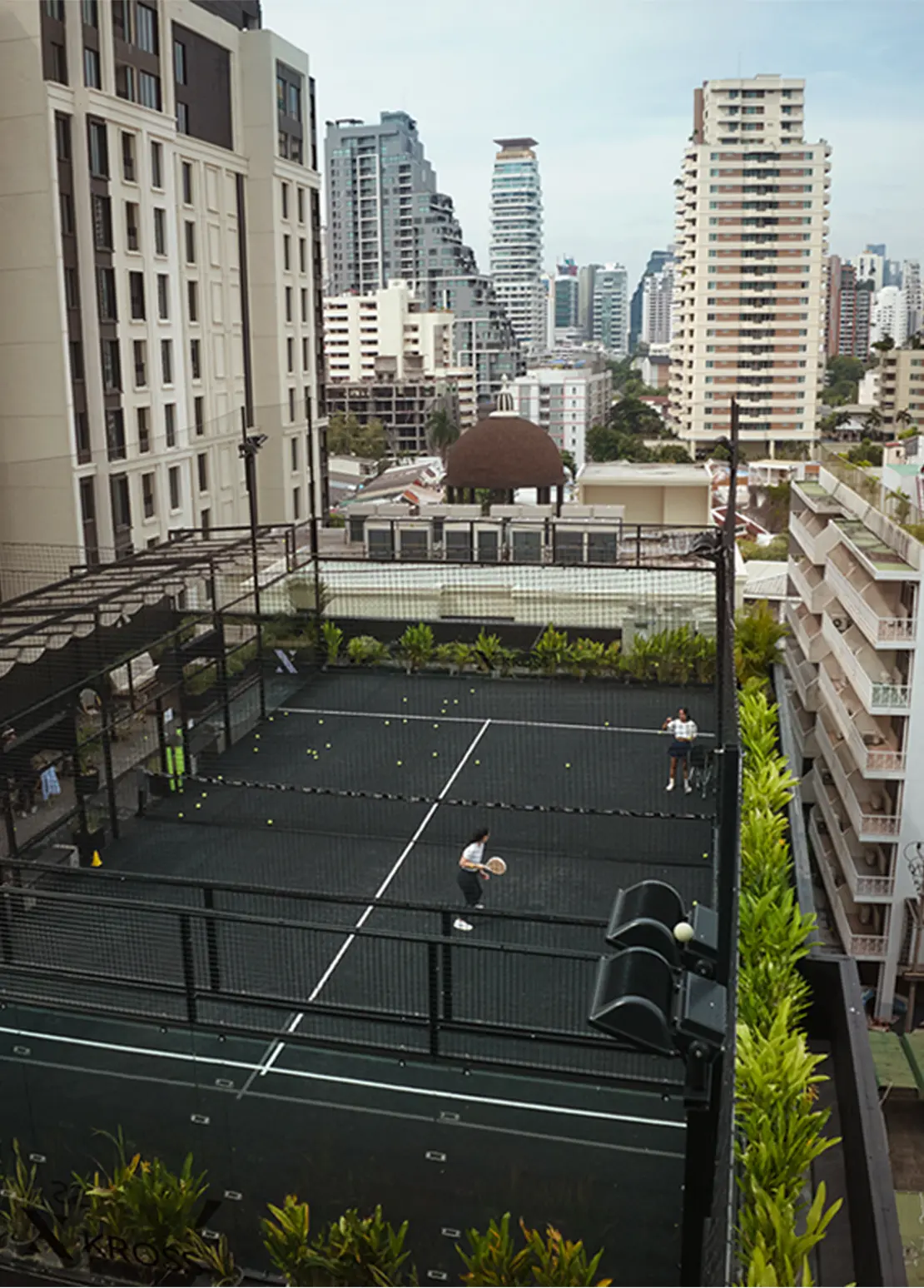
Some 180 skyscrapers tower above Bangkok. Several exceed the 300-metre mark, and new ones keep going up all the time. If you thought each one had a trendy rooftop bar on top of it, you’d only be partly right. Rooftop dining, rooftop dancing, rooftop tennis and rooftop fitness are ubiquitous in Bangkok, often 24/7 – against a backdrop of palms, waterfalls and glass-fronted facades.
There’s no end in sight. Think big? Think Bangkok!
There’s no end in sight. Think big? Think Bangkok!
The world’s largest Chinatown is located here. Its streets, markets and cookshops are a universe in themselves. Day and night, huge crowds squeeze through the labyrinth of market stalls and knick-knack stands. Sampang Lane is an ocean of consumer goods. Stretch your arms wide and you’ll soon find a bag of deep-fried frog legs in one hand and green flip flops with purple pompoms in the other.
There’s nothing you can’t buy, in every colour, size and shape. Enthroned amidst the hullabaloo is Phra Sukhothai Traimit, a five-and-a-half tonne Buddha figure and the world’s largest made of solid gold.
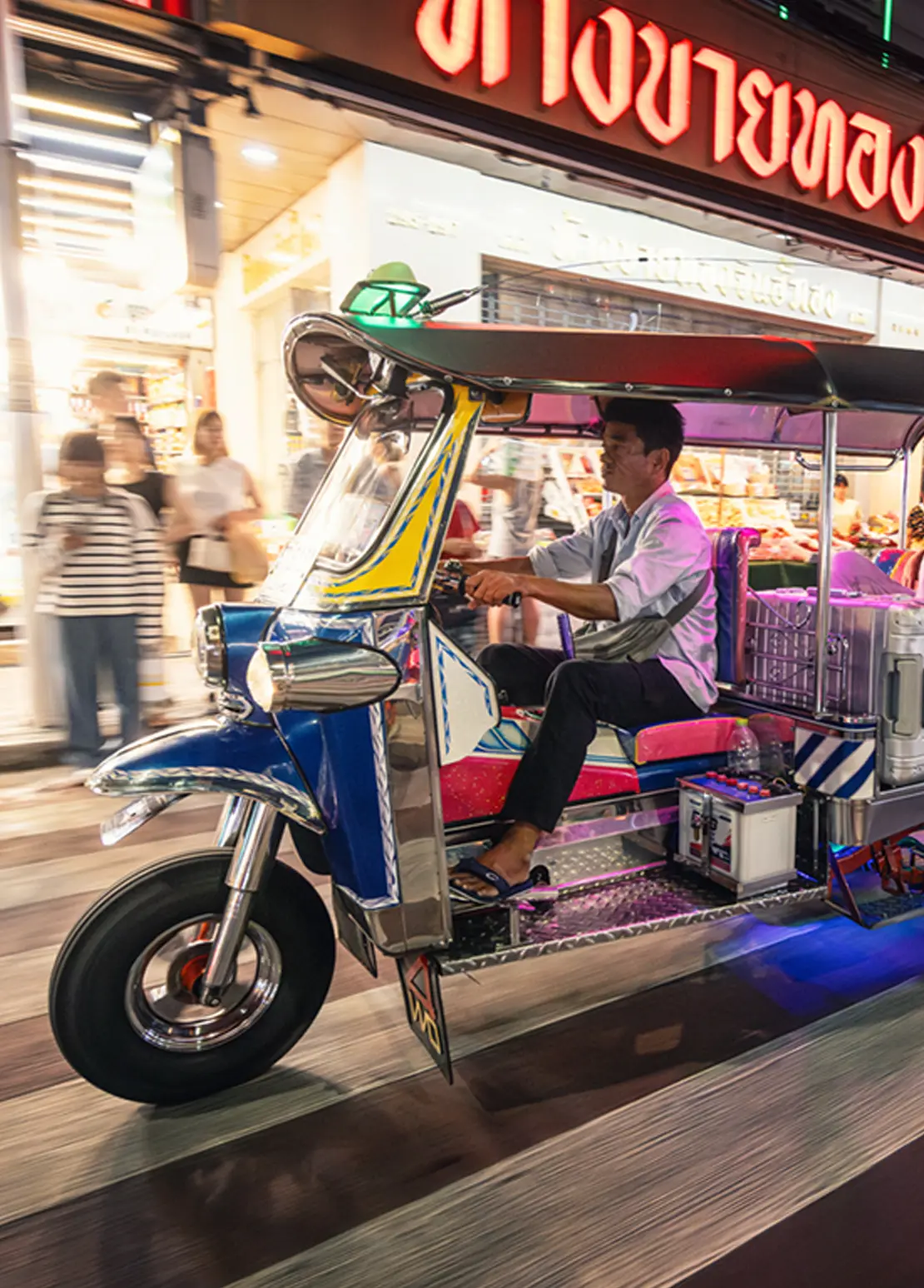
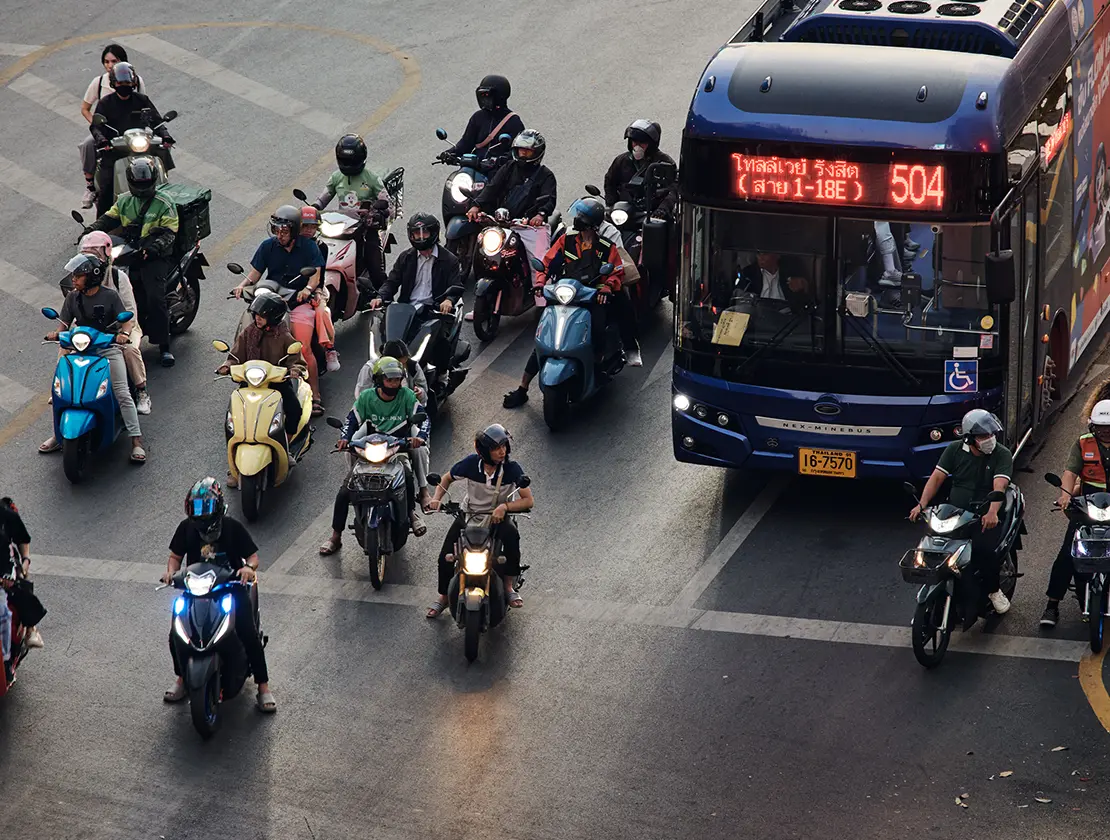
The traffic is phenomenal. Roughly ten million cars and mopeds fill the streets, with a thousand more added every day. Four-level motorways wind through the city, and fourteen-lane traffic crawls bumper-to-bumper through a sea of high-rise buildings, balconies, electrical wires, flapping clothes lines and steaming cookshops.
There’s nothing you can’t buy, in every colour, size and shape. Enthroned amidst the hullabaloo is Phra Sukhothai Traimit, a five-and-a-half tonne Buddha figure and the world’s largest made of solid gold.
The traffic is phenomenal. Roughly ten million cars and mopeds fill the streets, with a thousand more added every day. Four-level motorways wind through the city, and fourteen-lane traffic crawls bumper-to-bumper through a sea of high-rise buildings, balconies, electrical wires, flapping clothes lines and steaming cookshops.
The Thai capital sprawls in every direction over 1,600 square kilometres. Berlin would almost fit inside the metropolis twice.
Follow us and don’t miss a story


Think crazy, think Bangkok! Saturated with neon and towering advertisements, the megalopolis is also among the hottest on the planet. Temperatures in summer come close to 40 °C, but residents take the heat in their stride: ‘Hey, this is Bangkok!’
Walking through Bangkok, you start to ask yourself: how does the city function? Why doesn’t the behemoth collapse?
Driving into Bangkok from Saraburi in the rural north, you get an inkling of the logistics required to keep the city running. You also notice that Bangkok begins some 120 kilometres from the city centre.
Peeping from behind mountains, you spot concrete dams, power stations, headframes, pipelines, turbines, reservoirs and wind power plants. Bangkok is hungry for energy, a giant in constant need of feeding.
Walking through Bangkok, you start to ask yourself: how does the city function? Why doesn’t the behemoth collapse?
Driving into Bangkok from Saraburi in the rural north, you get an inkling of the logistics required to keep the city running. You also notice that Bangkok begins some 120 kilometres from the city centre.
Peeping from behind mountains, you spot concrete dams, power stations, headframes, pipelines, turbines, reservoirs and wind power plants. Bangkok is hungry for energy, a giant in constant need of feeding.
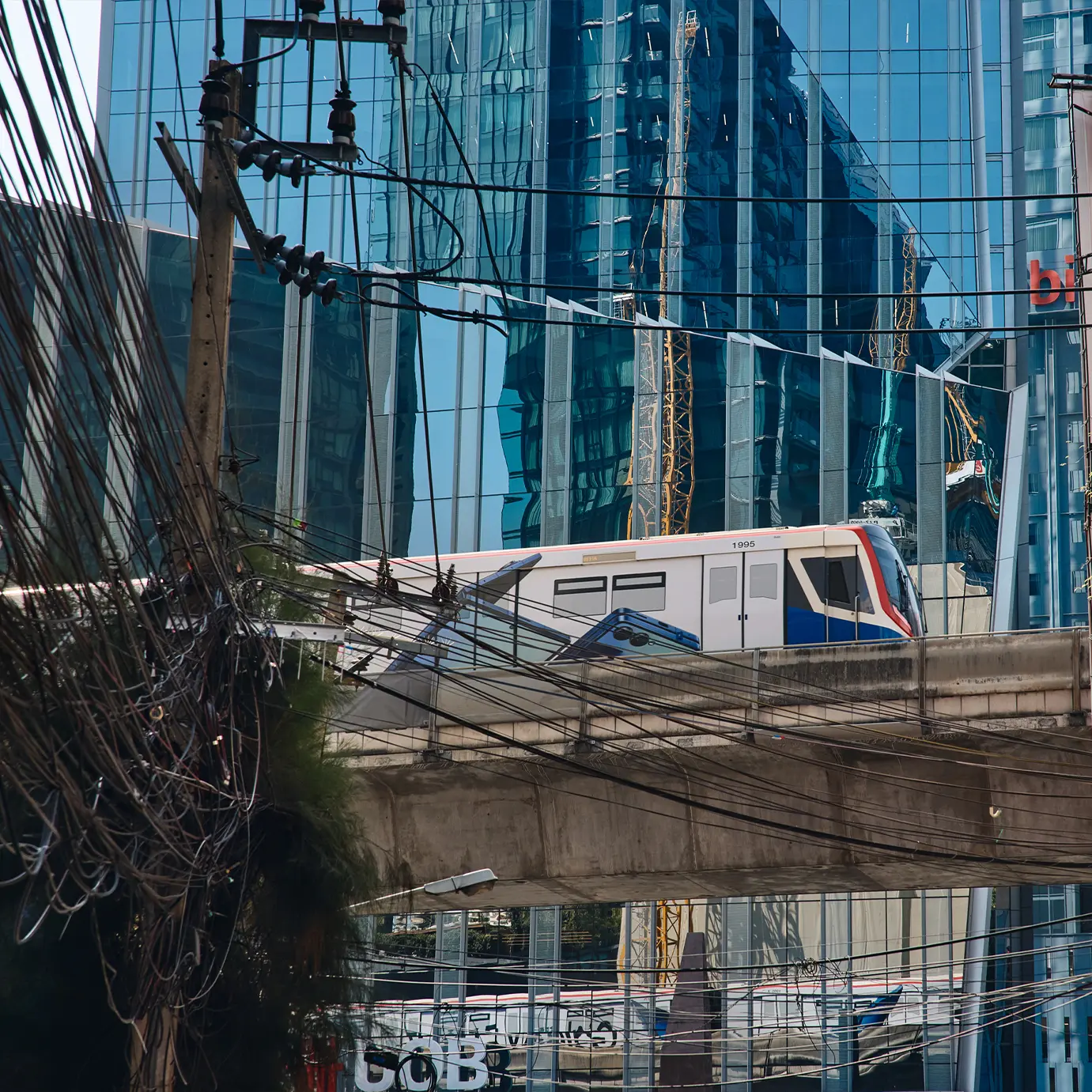
Next to appear are residential buildings, followed by car dealerships, repair shops, warehouses, factories and production halls. Power lines proliferate above the streets. Untangled, the wires would extend for thousands of kilometres. Some swing from poles, others dangle in clumps from house walls. Bangkok is so saturated with exposed cables that attempts to curb the chaos and bury at least some of them underground have failed repeatedly.
After two hours on the road, the city proper takes shape. Glass frontages loom, hoardings the size of football pitches. Metre by metre, you’re washed in waves toward the city centre. Skyscrapers thrust upwards to create canyons lined with advertising. Bumper to bumper, you inch toward the seething centre, a sea of light suffused with a thousand smells. This is where the urban jungle truly begins.
The question grows louder: What makes this city function?
After two hours on the road, the city proper takes shape. Glass frontages loom, hoardings the size of football pitches. Metre by metre, you’re washed in waves toward the city centre. Skyscrapers thrust upwards to create canyons lined with advertising. Bumper to bumper, you inch toward the seething centre, a sea of light suffused with a thousand smells. This is where the urban jungle truly begins.
The question grows louder: What makes this city function?
Bangkok’s residents take immensity lightly. Friendliness makes the city go round. It’s the giant’s true superpower.
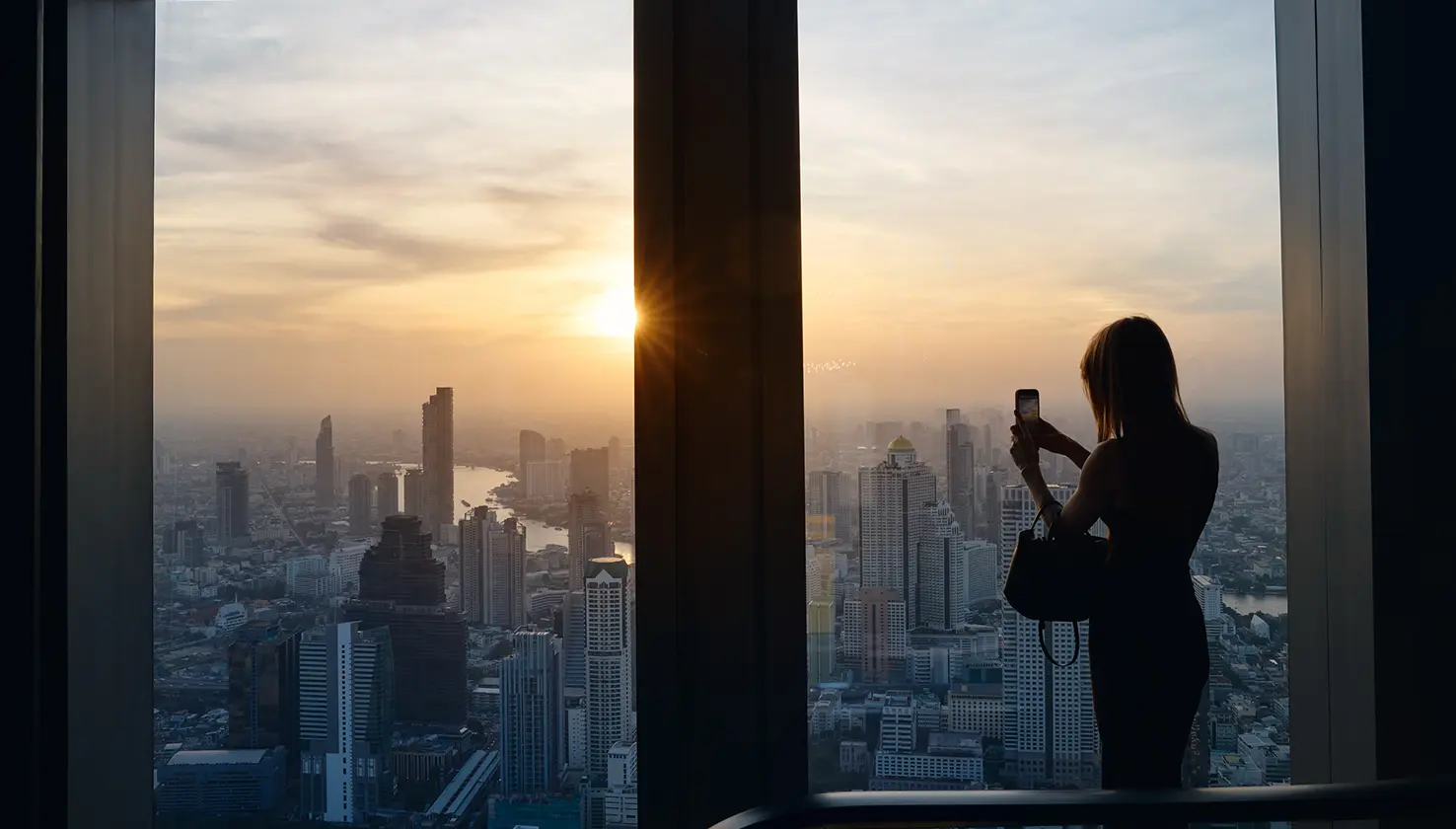
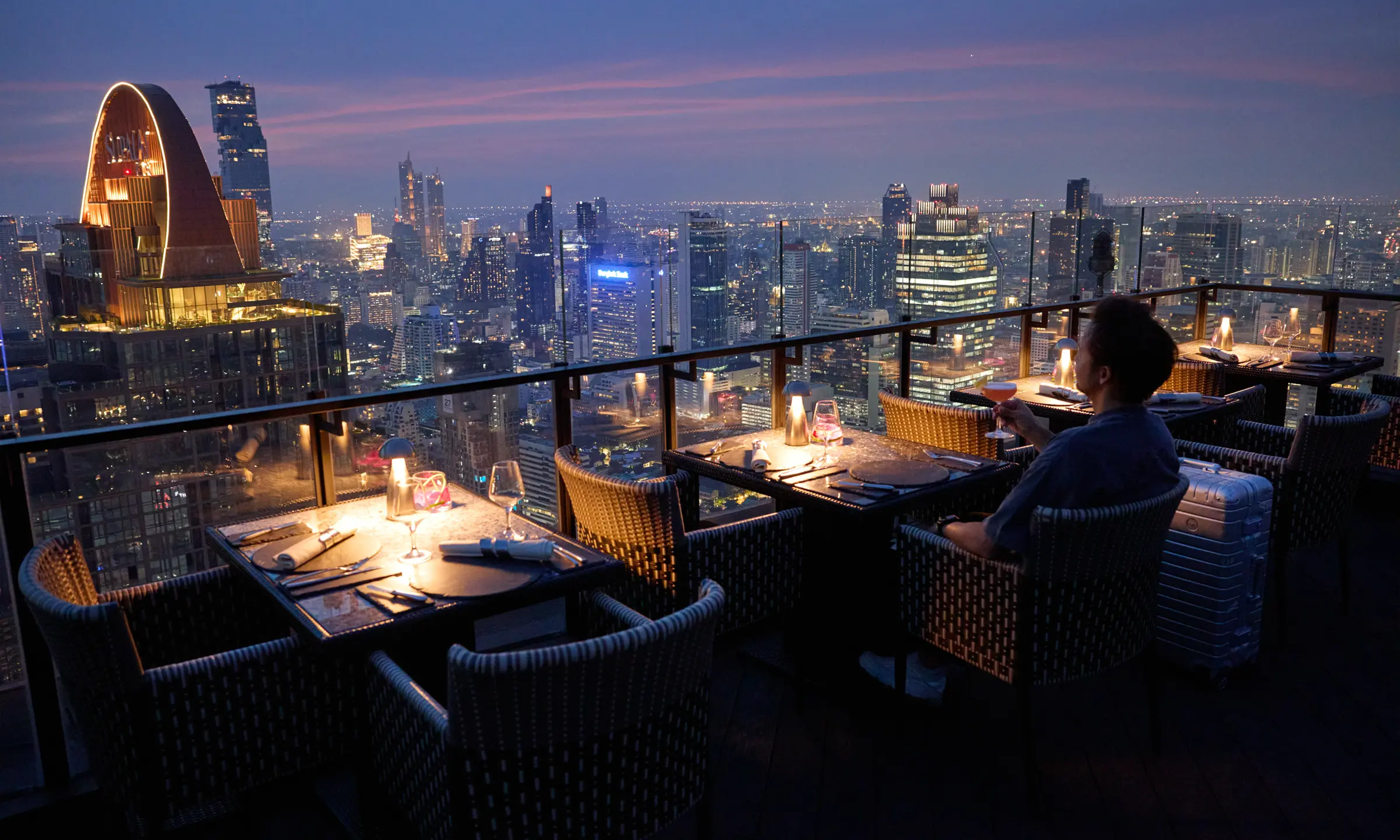
For another impression entirely, take the lift to the 54th floor of the 250-metre-tall State Tower, where an illuminated blue staircase leads out into the open air. Cross the glass floor to a lounge that hovers high above the city. The Sky Bar at the Lebua Hotel is an otherworldly watering hole. Fountains tinkle, jazz music effervesces. A tropical breeze blows as you sip your ice-cold drink and watch the crimson sun set.
Seen from above, Bangkok resembles an ocean of sparkling jewels. Jets take off from Suvarnabhumi Airport for destinations around the world, helicopters circle. To the west, east, south and north: groups of skyscrapers tower into the night sky, each one making up its own banking district, business enclave or stock exchange. And all of them are part of Bangkok.
The Tichuca Rooftop Bar, above the 47th floor of the T-One Building, is at the centre of it all. Traffic sweats past hundreds of metres below while pedestrians fill the nocturnal city’s neural pathways. Up here, microthermals circulate between the steep-sided canyons and a warm breeze blows.
Cosmic beach sounds issue across the upper deck, waiters shake drinks under a glittering dome. Guests relax by the pool on the 37th floor across the way; 300 metres up, there’s a strobe-lit party going at the Octave in the Marriott. People dance beneath the stars.
A man from Hong Kong in a red silk shirt and white slippers leans on a balustrade planted with lotus blossoms. He says the only thing you can possibly say: ‘Bangkok? Don’t think. Just do it!’
Seen from above, Bangkok resembles an ocean of sparkling jewels. Jets take off from Suvarnabhumi Airport for destinations around the world, helicopters circle. To the west, east, south and north: groups of skyscrapers tower into the night sky, each one making up its own banking district, business enclave or stock exchange. And all of them are part of Bangkok.
The Tichuca Rooftop Bar, above the 47th floor of the T-One Building, is at the centre of it all. Traffic sweats past hundreds of metres below while pedestrians fill the nocturnal city’s neural pathways. Up here, microthermals circulate between the steep-sided canyons and a warm breeze blows.
Cosmic beach sounds issue across the upper deck, waiters shake drinks under a glittering dome. Guests relax by the pool on the 37th floor across the way; 300 metres up, there’s a strobe-lit party going at the Octave in the Marriott. People dance beneath the stars.
A man from Hong Kong in a red silk shirt and white slippers leans on a balustrade planted with lotus blossoms. He says the only thing you can possibly say: ‘Bangkok? Don’t think. Just do it!’
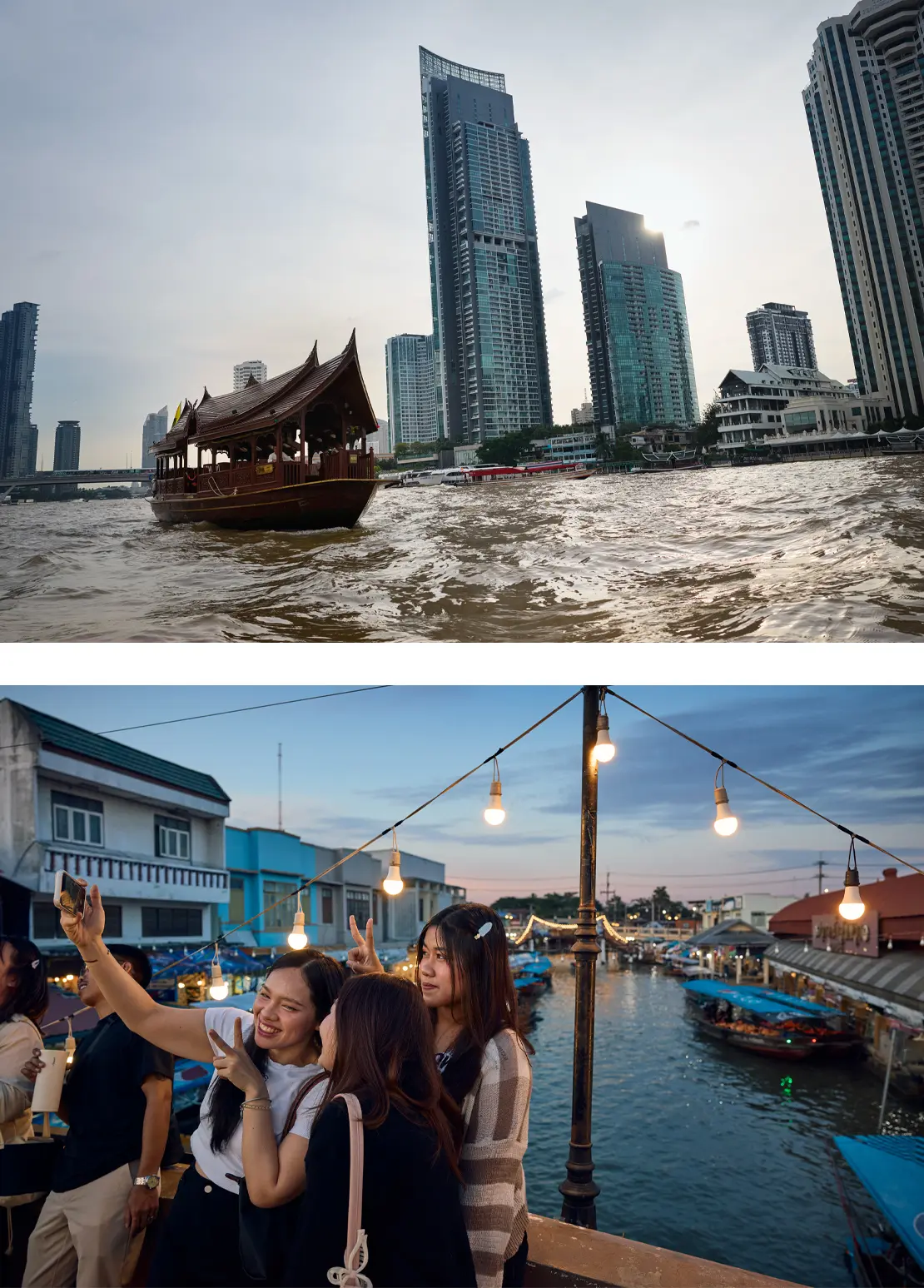
A hot sun shines down on Bangkok the next morning. Barges chug past and ferries rock gently on the green Chao Phraya River that winds through the city, its shores lined with temples, Ferris wheels and floating piers sucking at the water.
Air-conditioned limos pull up to the Mandarin Oriental Hotel, their passengers behind dark glass. The recent arrivals from Tokyo or Nairobi, Paris, Frankfurt, Shanghai, Mumbai – anywhere in the world – glide across the illuminated marble lobby and check in, enveloped in the jasmine-scented spray from the fans. A hotel water taxi will ferry them across to Patpong, where the night markets turn day into night and night into day.
If you haven’t already, it’s time to explore another Bangkok superlative: its incredible food. The spices and aromas are impossible to describe. The fish, the pork, the shrimp luxuriating in citrus, the bamboo shoots sizzling in mango juice. Eating in Bangkok is like an orgy without end. What was it French star chef Jean-Georges Vongerichten once said? ‘I arrived in Bangkok in 1980. I was 23 – and it changed my life.’
Air-conditioned limos pull up to the Mandarin Oriental Hotel, their passengers behind dark glass. The recent arrivals from Tokyo or Nairobi, Paris, Frankfurt, Shanghai, Mumbai – anywhere in the world – glide across the illuminated marble lobby and check in, enveloped in the jasmine-scented spray from the fans. A hotel water taxi will ferry them across to Patpong, where the night markets turn day into night and night into day.
If you haven’t already, it’s time to explore another Bangkok superlative: its incredible food. The spices and aromas are impossible to describe. The fish, the pork, the shrimp luxuriating in citrus, the bamboo shoots sizzling in mango juice. Eating in Bangkok is like an orgy without end. What was it French star chef Jean-Georges Vongerichten once said? ‘I arrived in Bangkok in 1980. I was 23 – and it changed my life.’
At an open restaurant down by the river, Benya Hegenbarth is enjoying a cold beer and a plate of spring rolls. His father was German, but Hegenbarth was born in Bangkok and has lived in the UK, Paris and the US. Fascinated by big cities, he spent six years working in New York. He’s been in Bangkok again for the last 15. The megalopolis is his home.
Hegenbarth speaks German and English, but his first language is Thai. He’s a photographer and producer who finds locations, people and motifs beyond the usual mainstream offerings.
‘Mainstream?’ Hegenbarth starts to laugh. In Bangkok, today’s mainstream is tomorrow’s has-been by evening. ‘Everything here is fleeting’, he says. ‘The trends, the moods.’ You have to know where to look: the courtyards, the tiny bars 150 metres in the air and the parties hidden behind the hubbub.
That’s what makes Bangkok tick, he says. The nuances, the tiny gestures. Hegenbarth often accompanies television teams on hopeless quests to capture illustrative images of the city. The question is always: where to start and where to end?
‘Bangkok is a wild city’, Hegenbarth says. ‘But it’s also more open and more accessible than many others around the world.’ Another thing he likes about Bangkok: ‘People are friendly, they don’t take themselves too seriously.’
Hegenbarth speaks German and English, but his first language is Thai. He’s a photographer and producer who finds locations, people and motifs beyond the usual mainstream offerings.
‘Mainstream?’ Hegenbarth starts to laugh. In Bangkok, today’s mainstream is tomorrow’s has-been by evening. ‘Everything here is fleeting’, he says. ‘The trends, the moods.’ You have to know where to look: the courtyards, the tiny bars 150 metres in the air and the parties hidden behind the hubbub.
That’s what makes Bangkok tick, he says. The nuances, the tiny gestures. Hegenbarth often accompanies television teams on hopeless quests to capture illustrative images of the city. The question is always: where to start and where to end?
‘Bangkok is a wild city’, Hegenbarth says. ‘But it’s also more open and more accessible than many others around the world.’ Another thing he likes about Bangkok: ‘People are friendly, they don’t take themselves too seriously.’
That last sentence lingers in your mind. After a few days, the words begin to echo like a soundtrack to the city. And then, dazed and shaken by the steady stream of stimuli, you start to take notice. The porter, the tuk-tuk driver, the saleswoman in the sushi shop: everyone smiles. The ticket man on the ferry, the bartender in the sky: they all smile. All around you, above, below, in front, behind and beside you, people jest, crack jokes, burst out laughing or break into a grin. Bangkok’s inhabitants take immensity lightly. With undisguised cheerfulness they give away what money cannot buy: a smile. The penny drops. Friendliness! That’s how the city functions, that’s what makes it go round. It’s Bangkok’s true superpower.
We would like to thank InterContinental Bangkok, Sindhorn Kempinski Hotel Bangkok, Vertigo & Moon Bar at Banyan Tree Bangkok and Kross Padel Bangkok.