












23° 37' 13.4" N 58° 33' 52.4" E
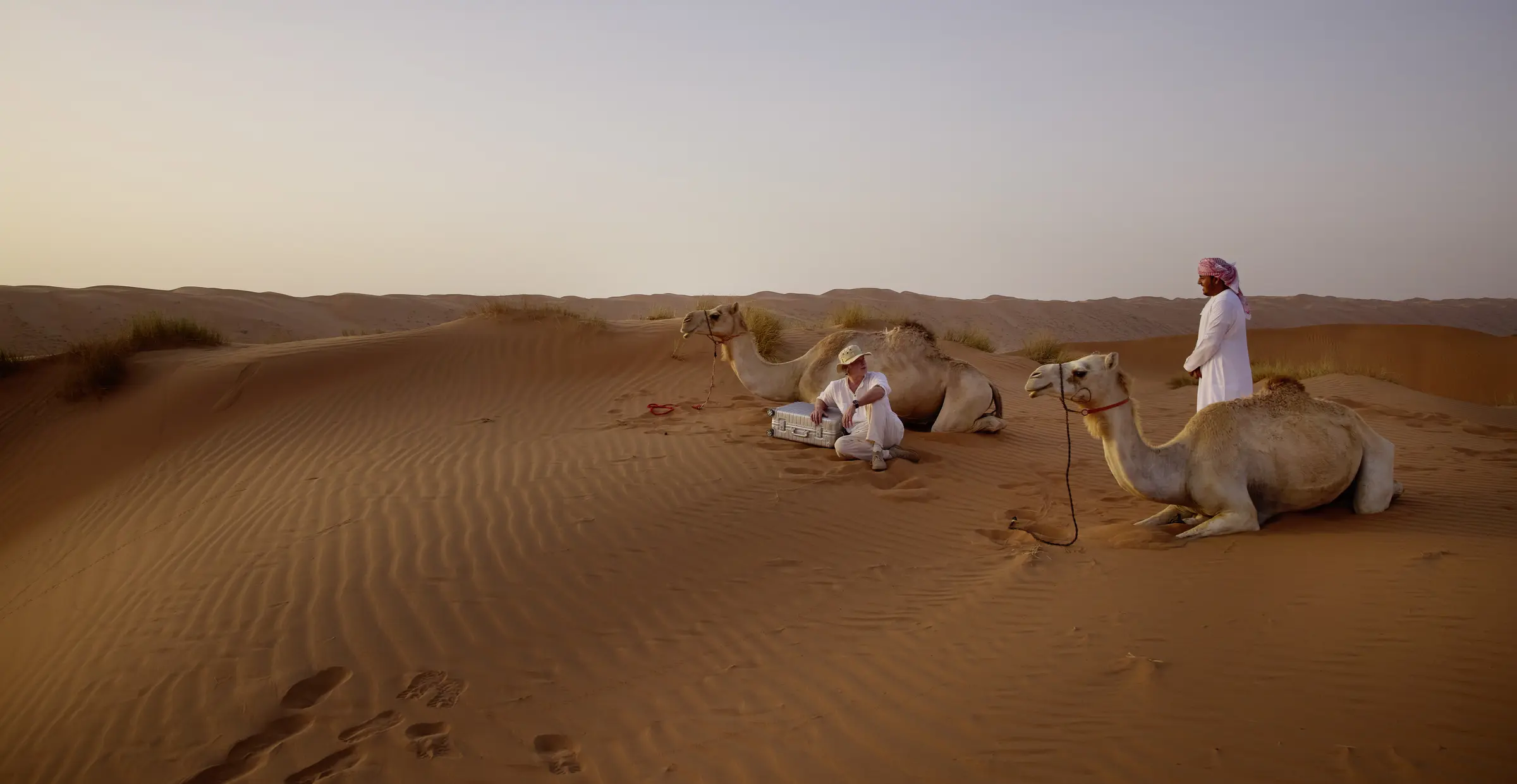
Dusty tracks lead into the desert beyond the jagged Jebel Akhdar range, into a world that hovers beyond the rugged highlands like a mirage. Somewhere in the distance, our destination awaits us. Mythical, magical, an archetypal place of longing across the millennia. Those who never reached it on their long journeys often paid with their lives.
Many legends have been woven around these miraculous places, halfway between delusion and reality, between desire and death by thirst. Nothing expresses a sense of arrival better. There’s perhaps no place in the world more closely linked to the magical experience of being on the road than an oasis. A patch of green in the desert fed by a thirst-slaking water source. A safe haven in a hostile environment.
Many legends have been woven around these miraculous places, halfway between delusion and reality, between desire and death by thirst. Nothing expresses a sense of arrival better. There’s perhaps no place in the world more closely linked to the magical experience of being on the road than an oasis. A patch of green in the desert fed by a thirst-slaking water source. A safe haven in a hostile environment.
Today, the ancient image has been frivolously distorted. Oases are as plentiful as sand in the desert: there are oases of well-being, oases of calm. Pubs around the world use the word in their name, countless wellness centres, soft drinks and holiday destinations adorn themselves with images of an oasis. But does any of this reflect reality?
If you want to find a true oasis, you have to leave the realm of promise behind and travel to its source.
If you want to find a true oasis, you have to leave the realm of promise behind and travel to its source.
Follow us and don’t miss a story


Many legends surround oases, places poised between delusion and reality, between desire and suffering death by thirst.
Muscat in the morning, drenched in sunlight. The white city by the sea is built low along the fringe of the Gulf of Oman. The call of the muezzin at 4.30 a.m. heralds the start of a new day in the Omani capital.
Labourers at the Muttrah fish market carry mighty tunas to the auction hall. The souks are fragrant with frankincense, dates and sandalwood are piled high. The heat is intense. On this May morning, it’s already 40 degrees Celsius in the shade.
If you’re looking for an oasis in the capital, you’ll only find contemporary interpretations. Gleaming white in the sunlight, the elegant Sultan Qaboos Grand Mosque is a modern oasis of faith. The Royal Opera House Muscat is only short distance away. Opulent, but designed in a simple Arabic style, the stunning, snow-white structure offers shade from the sun. Well-known operas and ballets are performed here, classical concerts, jazz and pop. This is an oasis too, you could say: a refuge for music and art.
Labourers at the Muttrah fish market carry mighty tunas to the auction hall. The souks are fragrant with frankincense, dates and sandalwood are piled high. The heat is intense. On this May morning, it’s already 40 degrees Celsius in the shade.
If you’re looking for an oasis in the capital, you’ll only find contemporary interpretations. Gleaming white in the sunlight, the elegant Sultan Qaboos Grand Mosque is a modern oasis of faith. The Royal Opera House Muscat is only short distance away. Opulent, but designed in a simple Arabic style, the stunning, snow-white structure offers shade from the sun. Well-known operas and ballets are performed here, classical concerts, jazz and pop. This is an oasis too, you could say: a refuge for music and art.
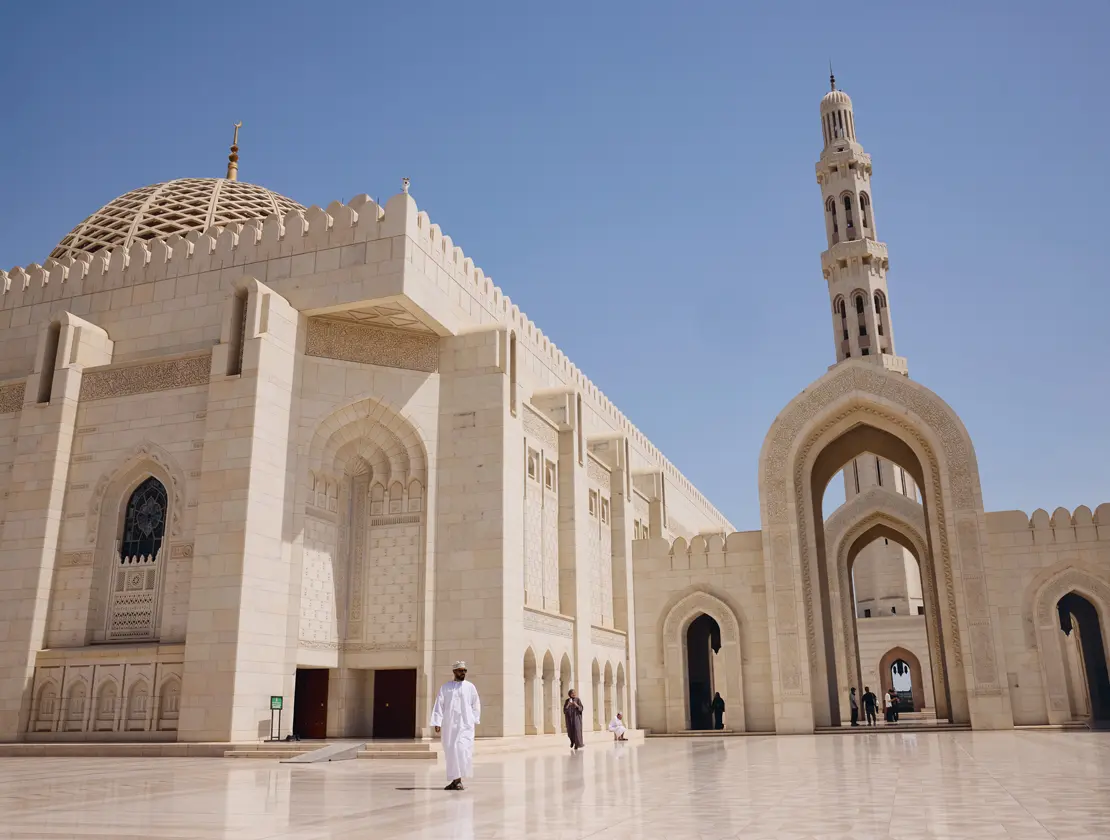
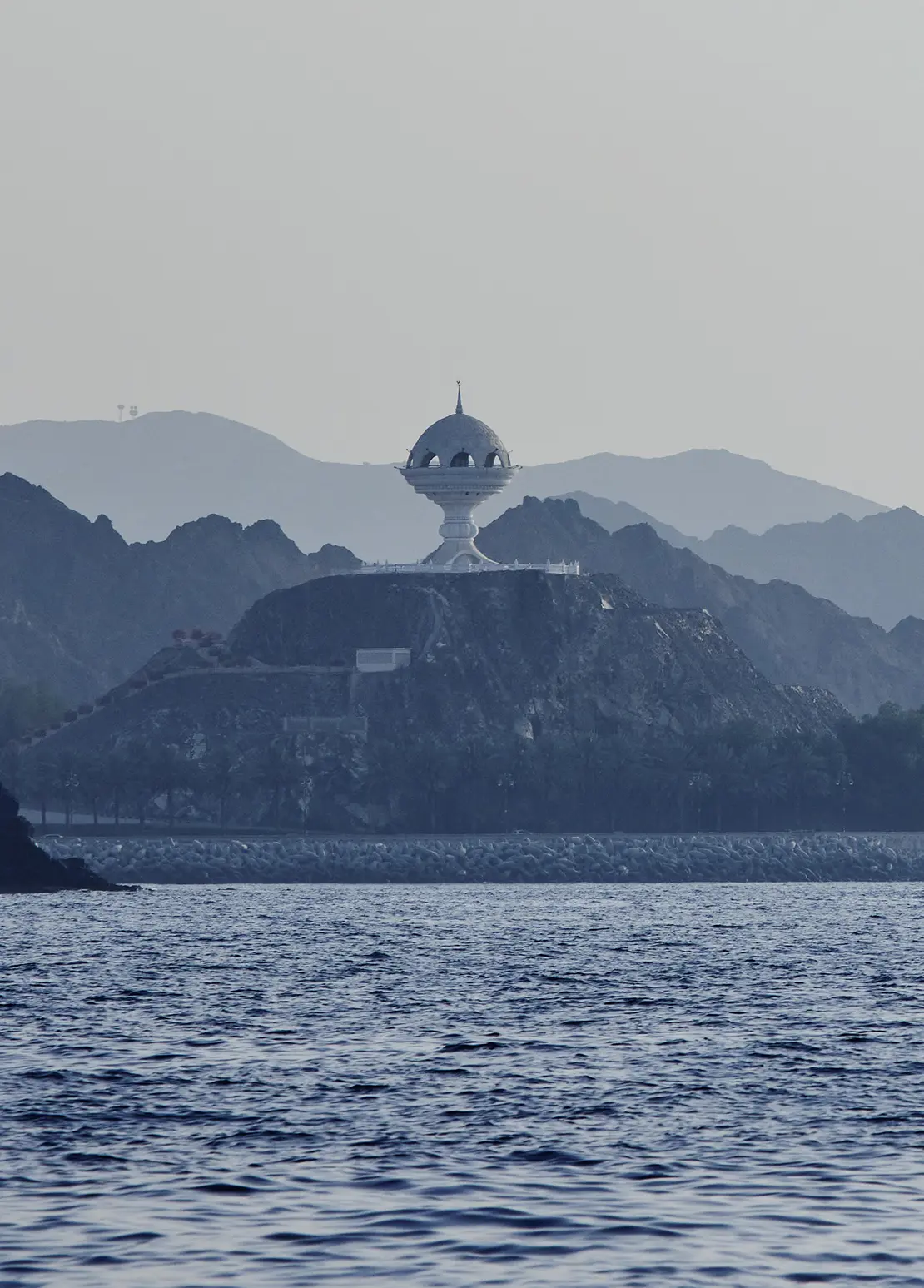
Despite their magnificence, these buildings have little in common with our magical destination. True oases are a miracle: they enable life where life is virtually impossible.
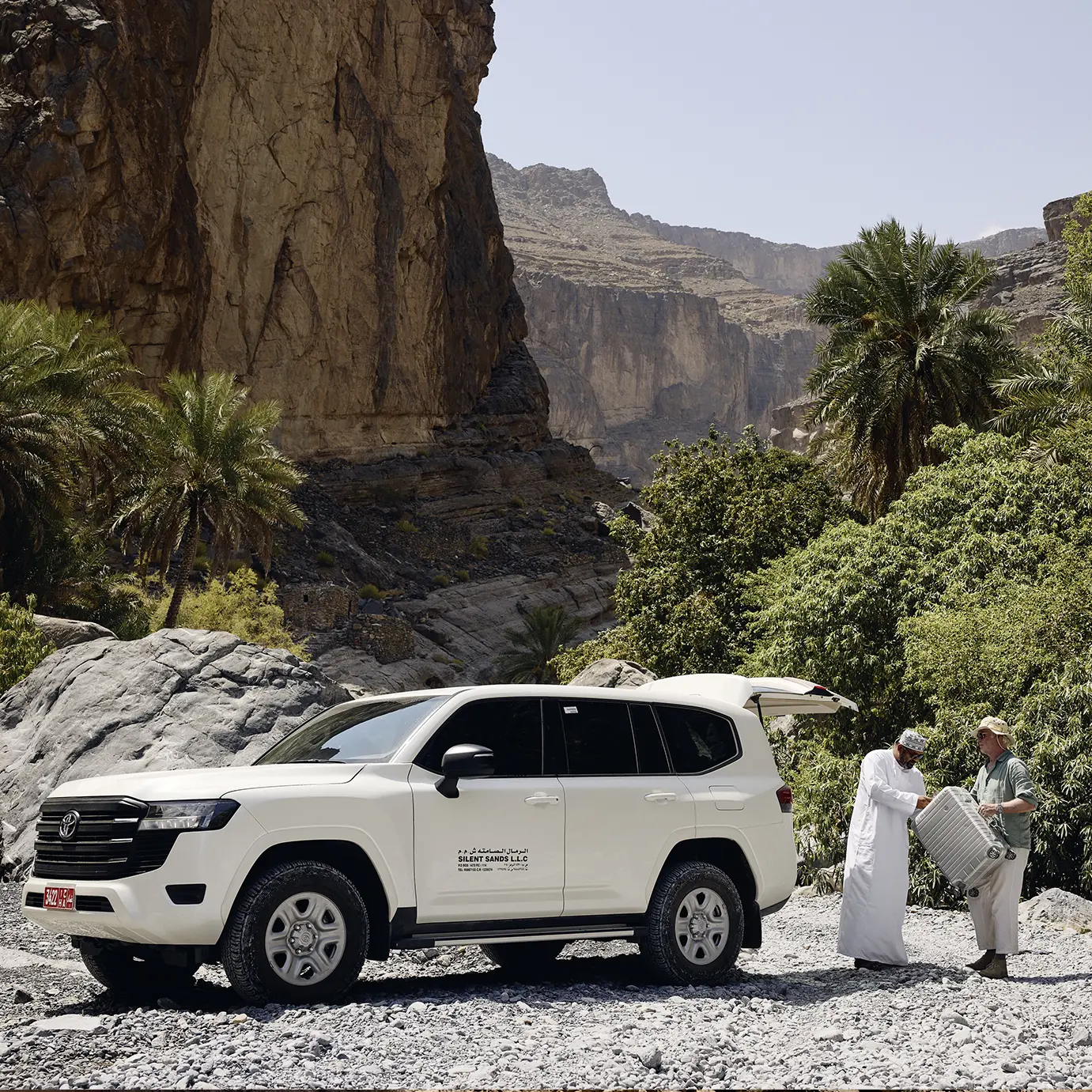
The next morning, Mustafa Khamis Al Ruzeiqi pulls up in a white four-by-four. Mustafa is our guide. He will take us to the magical, lush gardens in the desert.
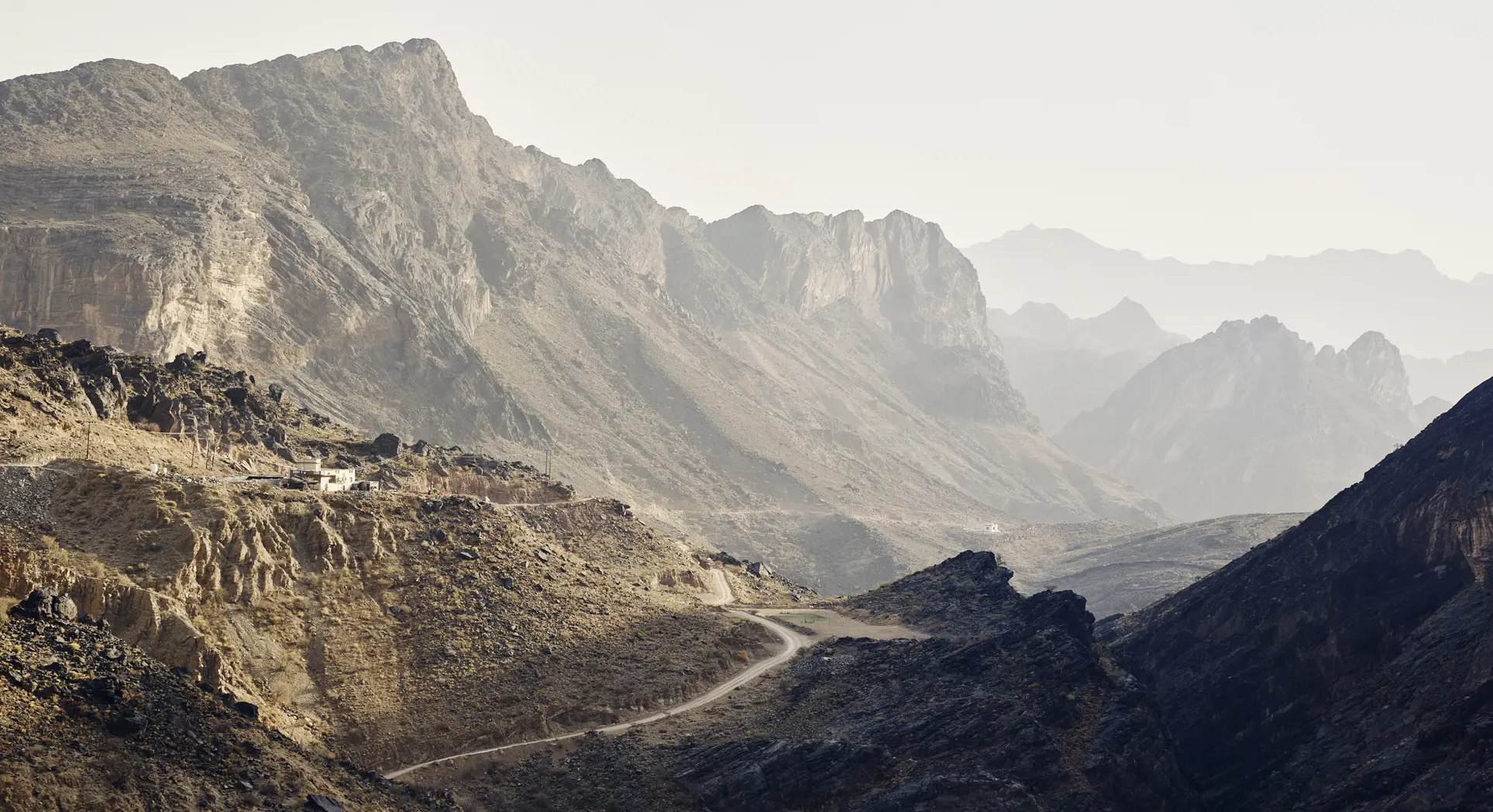
The world becomes more rarefied beyond Muscat, the canyons narrower, the world seemingly more treacherous. Steep mountain ridges, deep gorges, filled with boulders and debris. Golden eagles soar on the thermals. The villages are empty, there’s nothing but the hot wind.
Mustafa says: ‘This is the season when the body starts sweating on the inside.’ Outside, we appear to be travelling through a different time period: Arabia as it was a thousand years ago.
Today, few people get by without air-conditioning, Mustafa says. He talks about ‘boiling brain’ syndrome, a condition that occurs at over 40 degrees, when it feels like your insides are turning to steam.<
The next morning, Mustafa Khamis Al Ruzeiqi pulls up in a white four-by-four. Mustafa is our guide. He will take us to the magical, lush gardens in the desert.
The world becomes more rarefied beyond Muscat, the canyons narrower, the world seemingly more treacherous. Steep mountain ridges, deep gorges, filled with boulders and debris. Golden eagles soar on the thermals. The villages are empty, there’s nothing but the hot wind.
Mustafa says: ‘This is the season when the body starts sweating on the inside.’ Outside, we appear to be travelling through a different time period: Arabia as it was a thousand years ago.
Today, few people get by without air-conditioning, Mustafa says. He talks about ‘boiling brain’ syndrome, a condition that occurs at over 40 degrees, when it feels like your insides are turning to steam.<
Outside, 3,000-metre peaks tower above the rocky desert. Chalkstone plateaus and ophiolites, millions of years old. It’s a fascinating, but ominous world. Dry as dust and almost utterly devoid of moisture. The thought of finding an oasis becomes all the more inexplicable. What could possibly thrive out here?
We drive through Wadi Bani Awf, a massive gorge, our vehicle swaying from side to side like an old donkey. Mustafa steers it across a dip in the road, and then a miraculous sight appears: a tree! Leaves, branches, living greenery in the middle of a furnace. Soon narrow terraces come into view, hugging the jagged cliffs. Then an oasis appears: a garden of palms! Mustafa says: ‘Welcome to Bilad Sayt.’
The old village lies in a wadi, an Arabic word for a kind of valley, usually a dry riverbed. But where has the vegetation come from? The palm trees? The dates? It hasn’t rained in months.
We drive through Wadi Bani Awf, a massive gorge, our vehicle swaying from side to side like an old donkey. Mustafa steers it across a dip in the road, and then a miraculous sight appears: a tree! Leaves, branches, living greenery in the middle of a furnace. Soon narrow terraces come into view, hugging the jagged cliffs. Then an oasis appears: a garden of palms! Mustafa says: ‘Welcome to Bilad Sayt.’
The old village lies in a wadi, an Arabic word for a kind of valley, usually a dry riverbed. But where has the vegetation come from? The palm trees? The dates? It hasn’t rained in months.
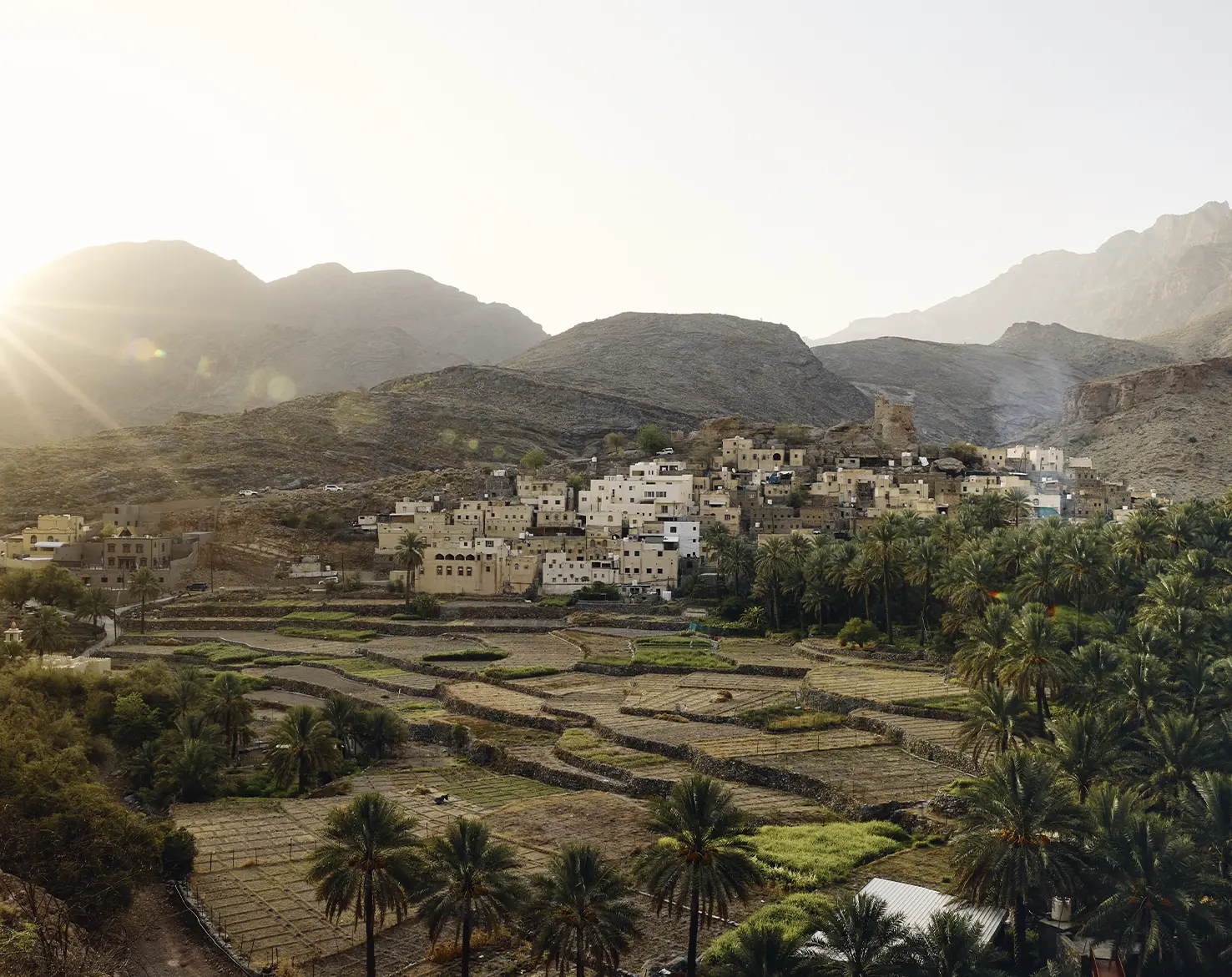
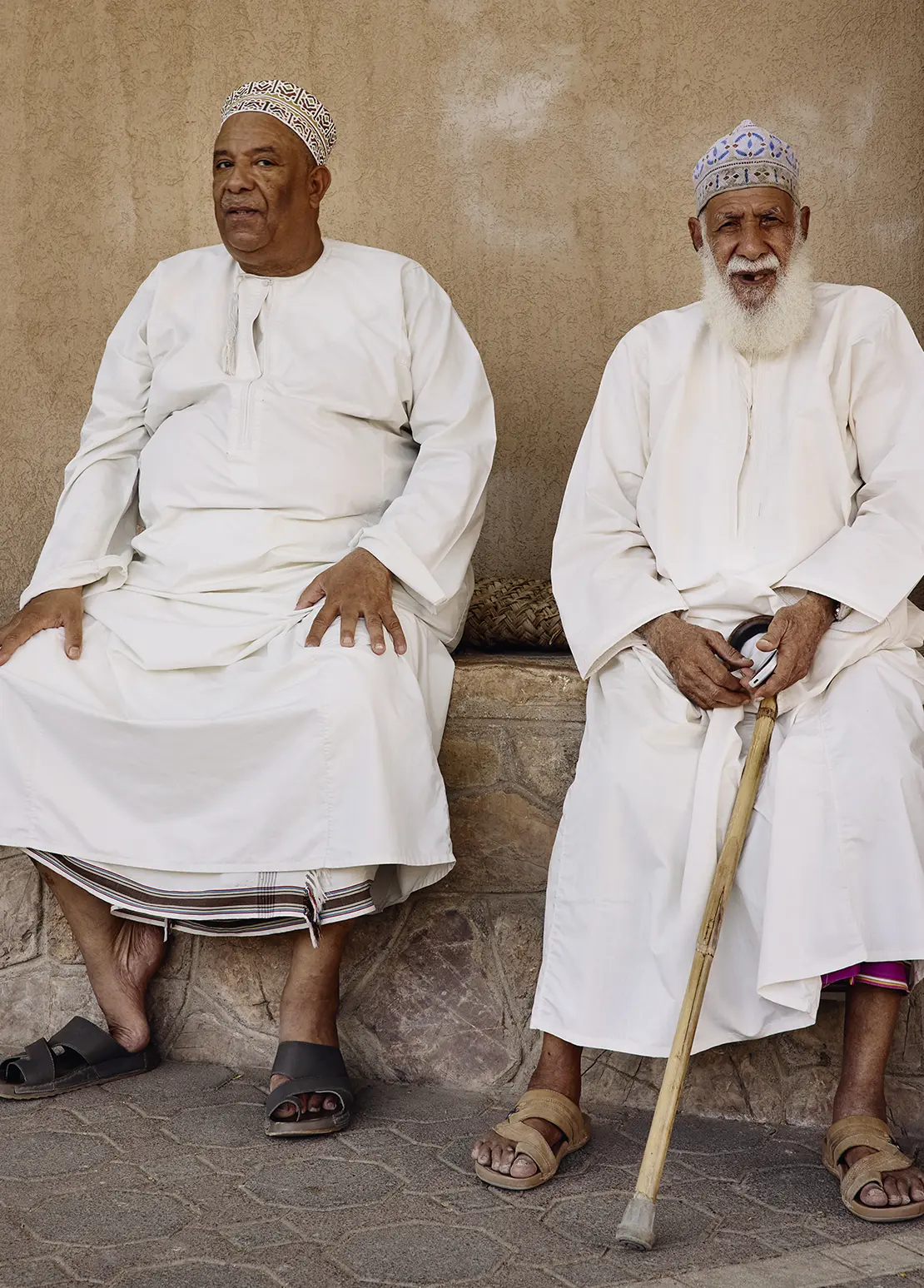
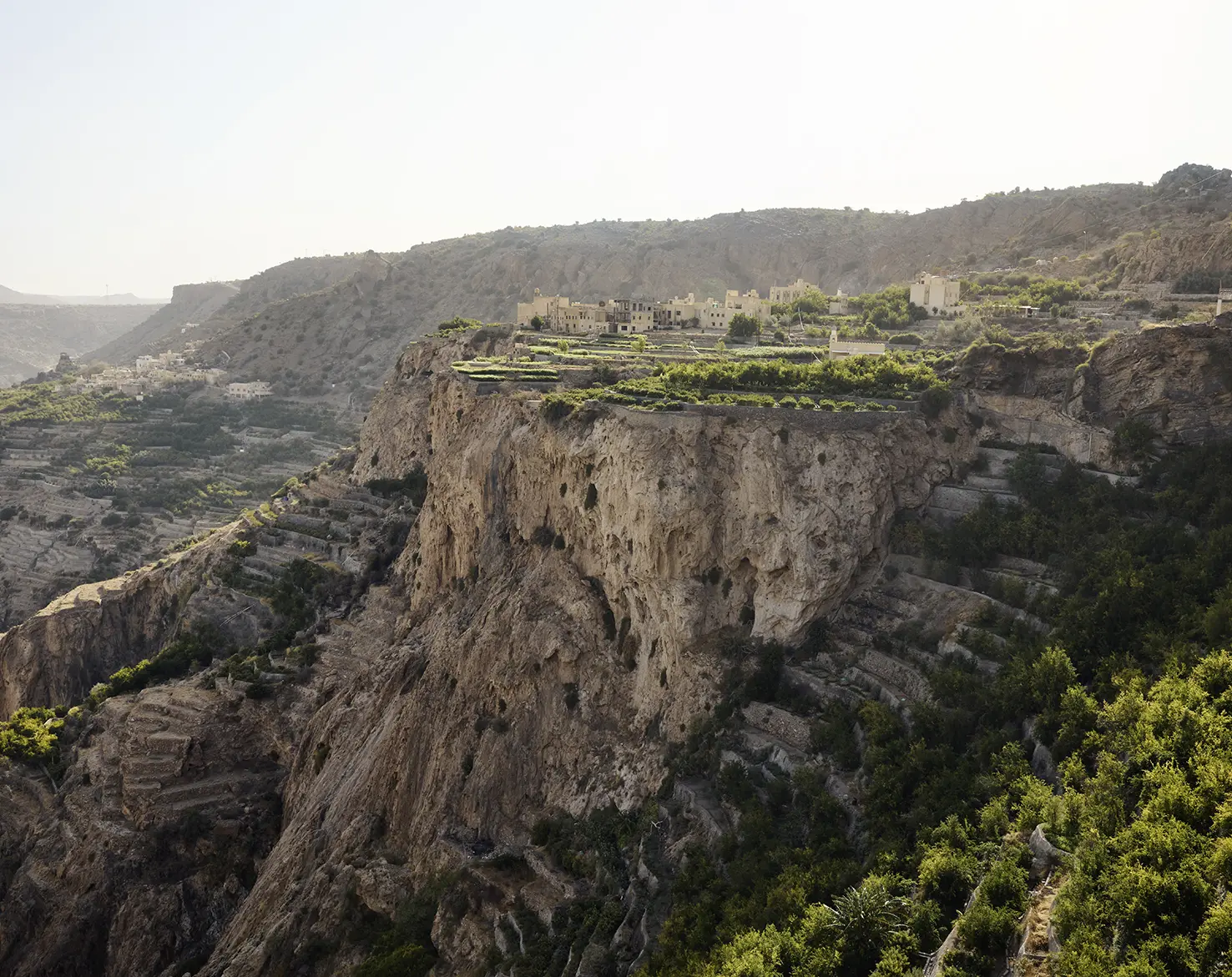
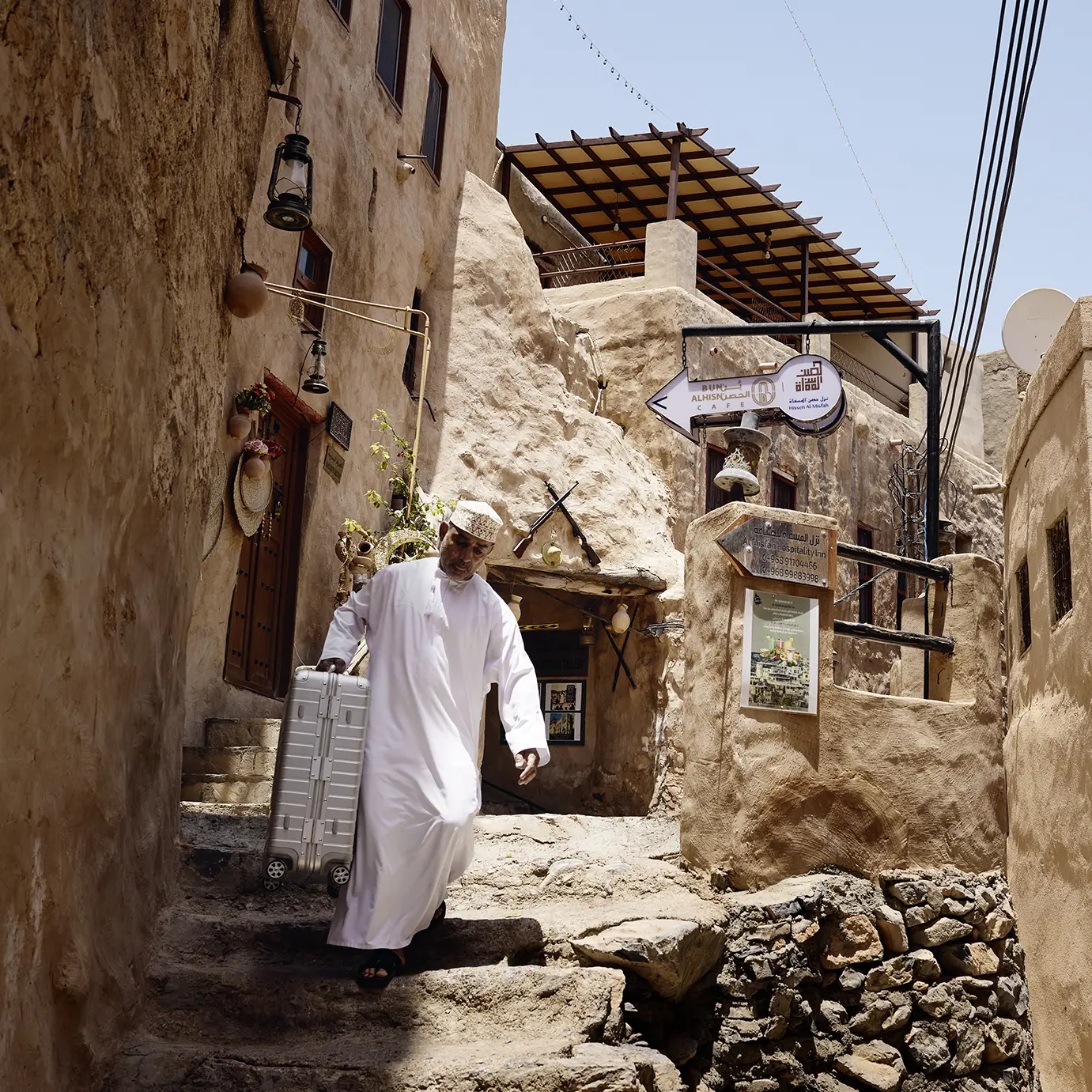
Two old men leave the mosque and three children can be seen sitting in the shade of a car. The village lies scattered across the rocks like a collection of pale cubes. Built from mud and stone, the houses are connected by a labyrinth of steep staircases. Green fields lie below. It’s a delicate form of farming and a brave attempt to plant crops in a wilderness of rocks.
The mountain village clings to the crags in the evening light. Hot crater walls rise up on all sides. The palm trees bear dates, bunches of yellow fruit. Soon, the harvest will begin – in the middle of summer.
I think back to all those adverts for holiday homes, hotels, yoga retreats. Each one described as an ‘oasis of happiness’, ‘oasis for the senses’ or an ‘oasis of relaxation’.
The mountain village clings to the crags in the evening light. Hot crater walls rise up on all sides. The palm trees bear dates, bunches of yellow fruit. Soon, the harvest will begin – in the middle of summer.
I think back to all those adverts for holiday homes, hotels, yoga retreats. Each one described as an ‘oasis of happiness’, ‘oasis for the senses’ or an ‘oasis of relaxation’.
Here in Oman, the word carries a deeper meaning. An oasis is no less than an exercise in survival. A delicate attempt to draw fertility from the earth. It’s a portentous destination. Those who once stopped here were desperate for water. Most made it only after enduring great hardship. Those who succeeded in leading their caravans to an oasis could dream of resuming their journey.
We drive deeper into Oman. Soon we reach our next oases, which have good-sized settlements attached: Al Hamra, Nizwa and the citadel oasis Bahla, one of the country’s oldest royal cities. The date palm gardens are now bigger, more luxuriant. Residents grow mangos and lemons, harvest papayas, oranges, cucumbers and carrots.
We drive deeper into Oman. Soon we reach our next oases, which have good-sized settlements attached: Al Hamra, Nizwa and the citadel oasis Bahla, one of the country’s oldest royal cities. The date palm gardens are now bigger, more luxuriant. Residents grow mangos and lemons, harvest papayas, oranges, cucumbers and carrots.
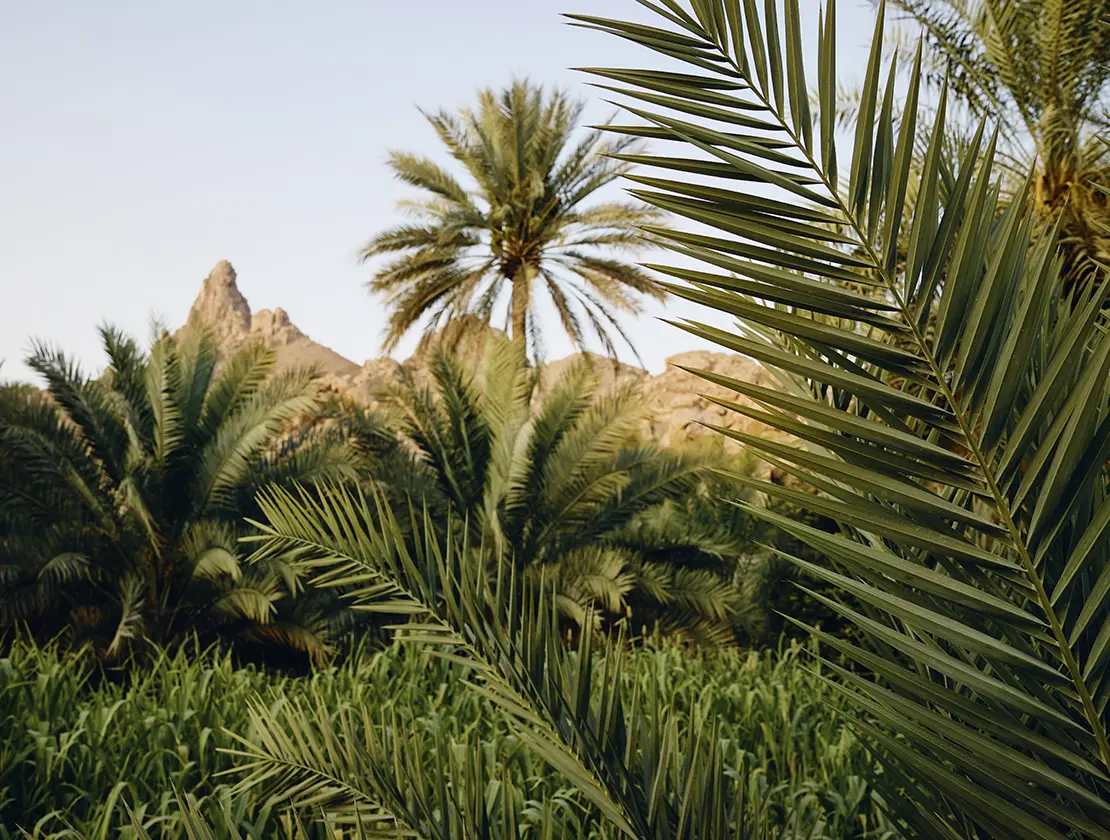
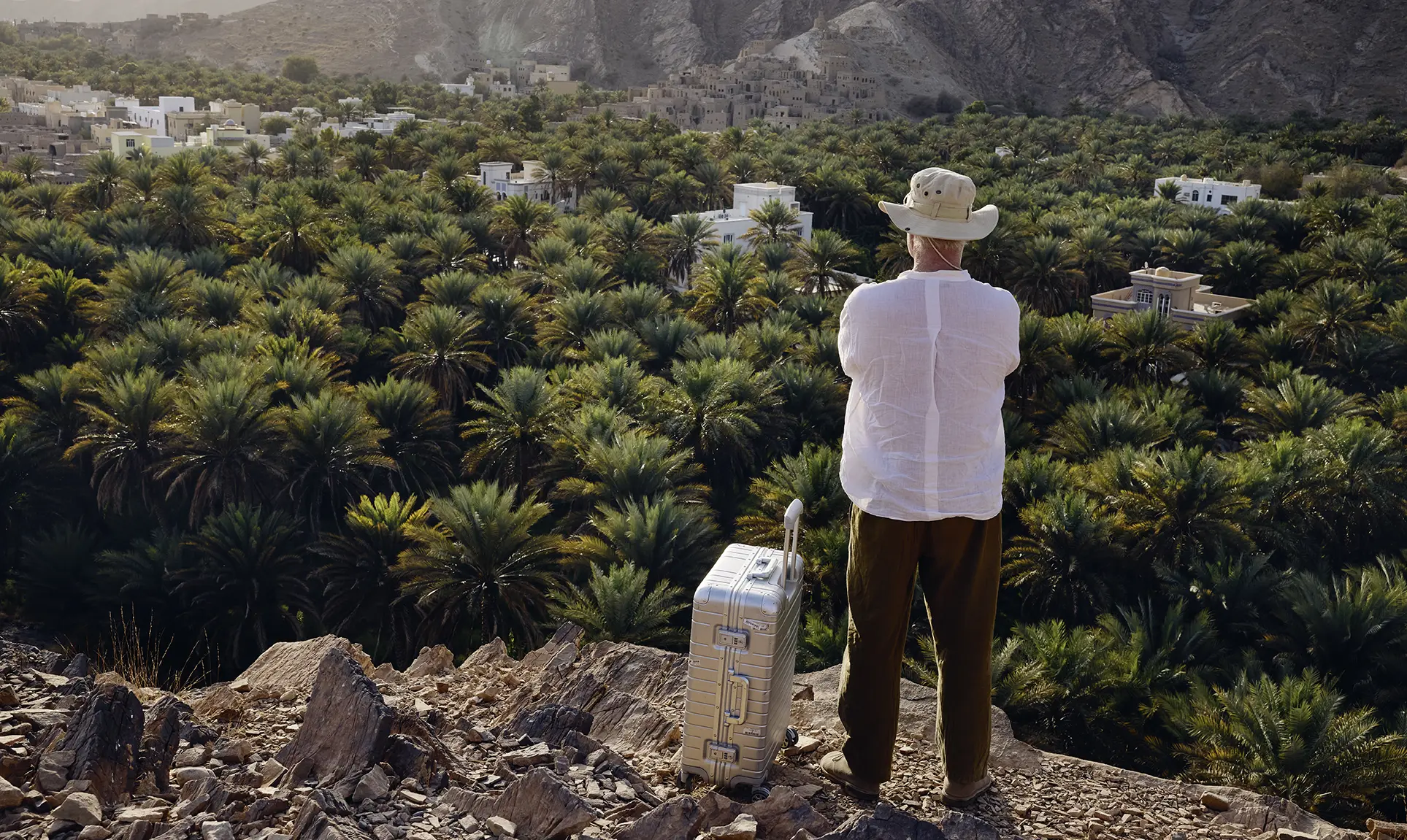
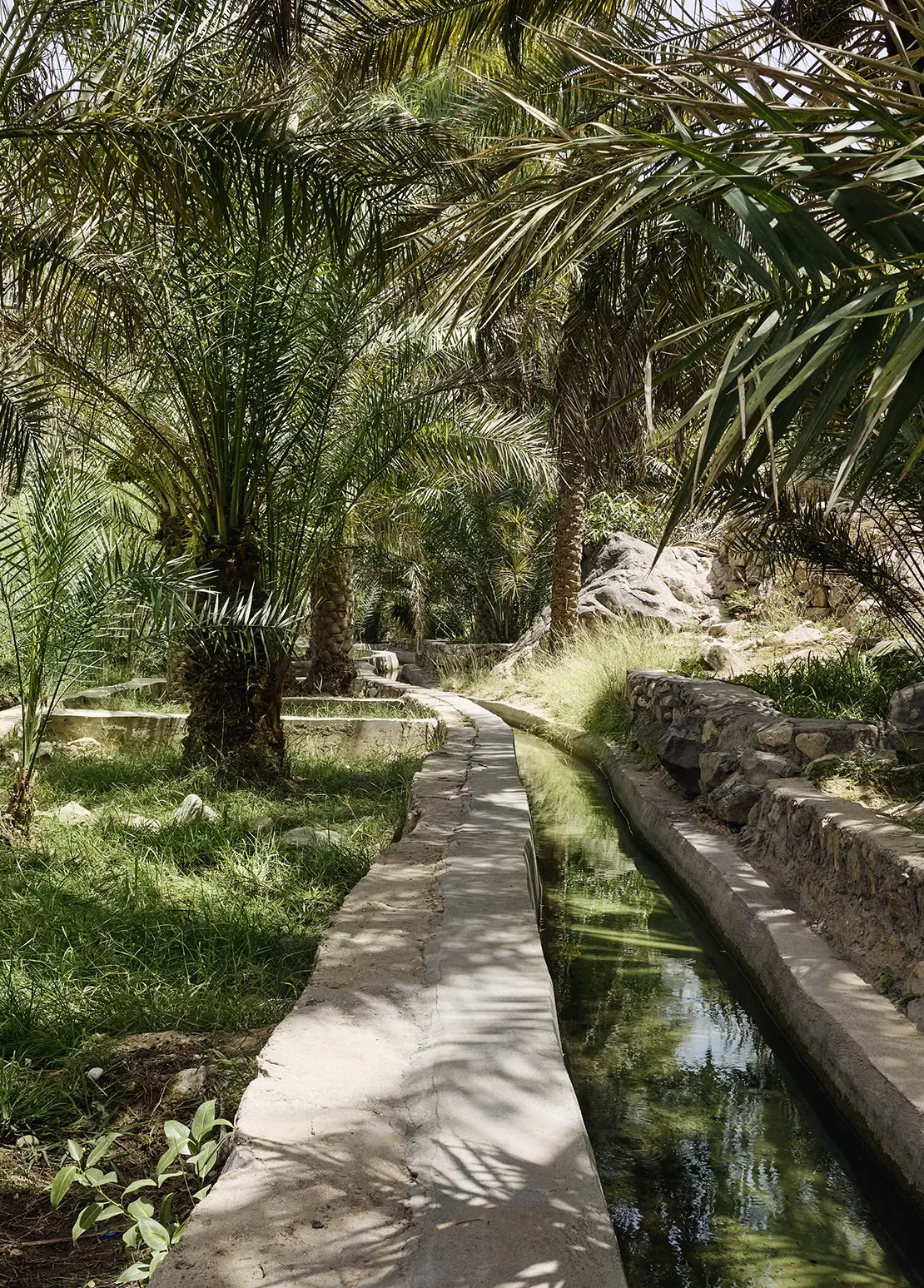
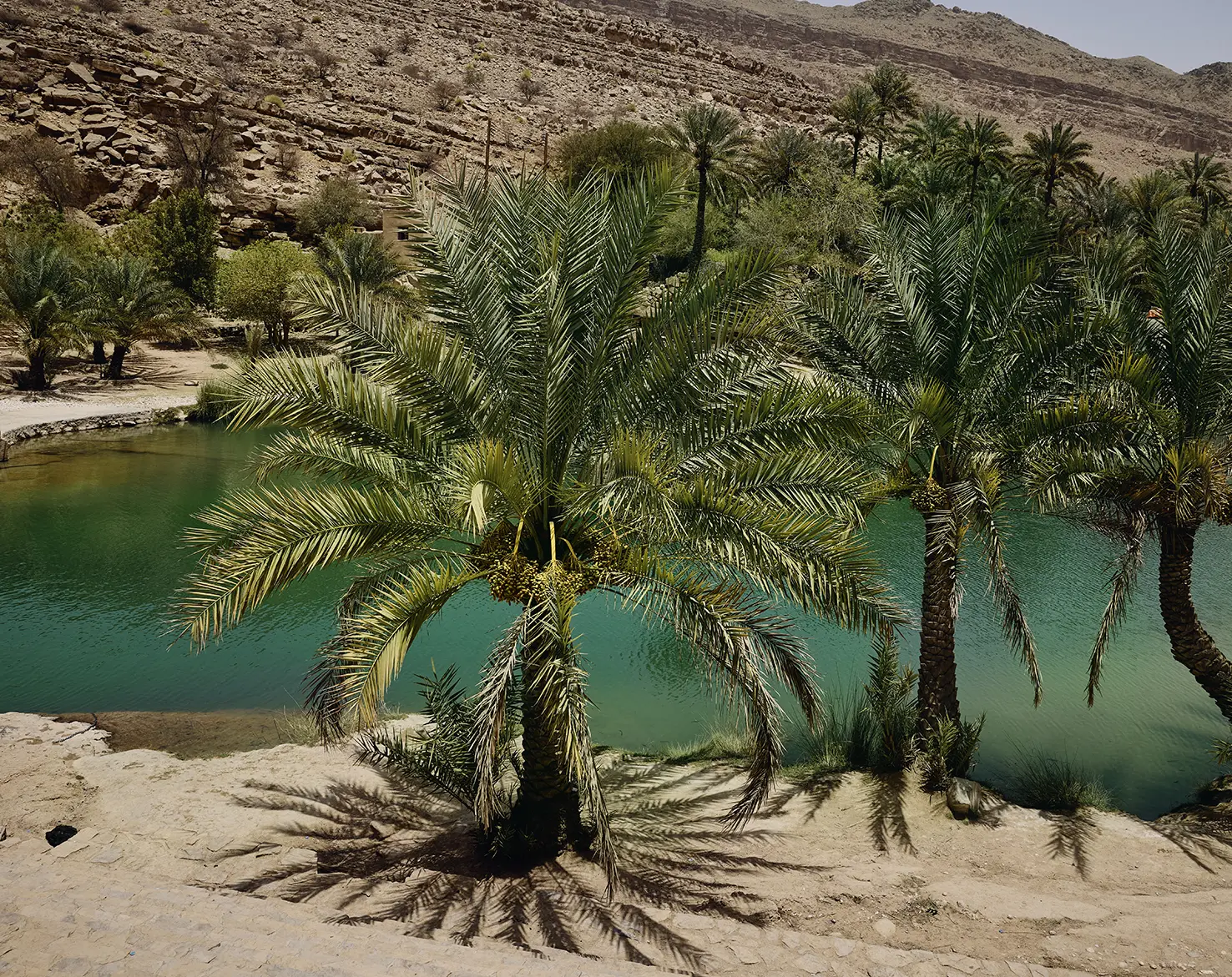
Barely able to believe our eyes, we gaze at a thick grove of mighty palm trees. They cool the air, exhale the promise of moisture and provide shade – an almost unknown commodity in the desert. The palm groves stretch for hundreds of metres. A sea of fronds like a hallucination in the ochre wasteland.
Oases are fragile entities that cannot be taken for granted. There are river water oases, foggara oases, groundwater oases, spring-water oases. Sometimes they are created entirely by nature when rainwater collects and seeps into the earth over long periods of time, eventually creating an artesian source.
In many cases, they required human help. People build wells, dig irrigation channels. Metre for metre, stone upon stone. Only then could they begin to cultivate crops. Water was precious and had to be used wisely: no water, no life. An oasis is thus far more than a colourful symbol of rest and relaxation. It represents the fundamental question: to be, or not to be?
In hot, dry countries around the world, people have always addressed this fundamental question. The green stripe in the national flag of Oman symbolises the country’s native vegetation. The colour represents fertility in the middle of the desert.
Oases are fragile entities that cannot be taken for granted. There are river water oases, foggara oases, groundwater oases, spring-water oases. Sometimes they are created entirely by nature when rainwater collects and seeps into the earth over long periods of time, eventually creating an artesian source.
In many cases, they required human help. People build wells, dig irrigation channels. Metre for metre, stone upon stone. Only then could they begin to cultivate crops. Water was precious and had to be used wisely: no water, no life. An oasis is thus far more than a colourful symbol of rest and relaxation. It represents the fundamental question: to be, or not to be?
In hot, dry countries around the world, people have always addressed this fundamental question. The green stripe in the national flag of Oman symbolises the country’s native vegetation. The colour represents fertility in the middle of the desert.
An oasis is a portentous destination. Those who once stopped here were desperate for water – and could dream of resuming their journey.
The next morning, the car thermometer reads 49 degrees in the shade – a new record. Mustafa simply says: ‘The heat is wild!’
At noon we arrive in Misfah al Abriyyin, a medieval village perched on the cliffs above the palm gardens like a bird’s nest. The techniques used to cultivate this oasis are more than 2,000 years old. Ancient irrigation channels supply water to the plantations, where dates, olives and mangos grow.
We meet Abdullah Al Abri on the terrace. His family roots go back more than a thousand years. His great-grandfathers planted the date palms and worked the fields down the centuries. Al Abri is familiar with all the customs and traditions here.
‘There were no clocks in the village until 1972’, he says. The children used to walk to school, down into the valley and back again – a daily trek in the blistering hot sun. As a youngster, Al Abri learned how to harvest honey and make sweet syrup from dates. Instead of influencers, he knew the goats by name. But there’s one thing he will never forget: ‘Water is everything. It’s more valuable than all the gold and oil on earth.’
At noon we arrive in Misfah al Abriyyin, a medieval village perched on the cliffs above the palm gardens like a bird’s nest. The techniques used to cultivate this oasis are more than 2,000 years old. Ancient irrigation channels supply water to the plantations, where dates, olives and mangos grow.
We meet Abdullah Al Abri on the terrace. His family roots go back more than a thousand years. His great-grandfathers planted the date palms and worked the fields down the centuries. Al Abri is familiar with all the customs and traditions here.
‘There were no clocks in the village until 1972’, he says. The children used to walk to school, down into the valley and back again – a daily trek in the blistering hot sun. As a youngster, Al Abri learned how to harvest honey and make sweet syrup from dates. Instead of influencers, he knew the goats by name. But there’s one thing he will never forget: ‘Water is everything. It’s more valuable than all the gold and oil on earth.’
Oman, land of fairy tales. But this is the real thing. Below us lies blue paradise.
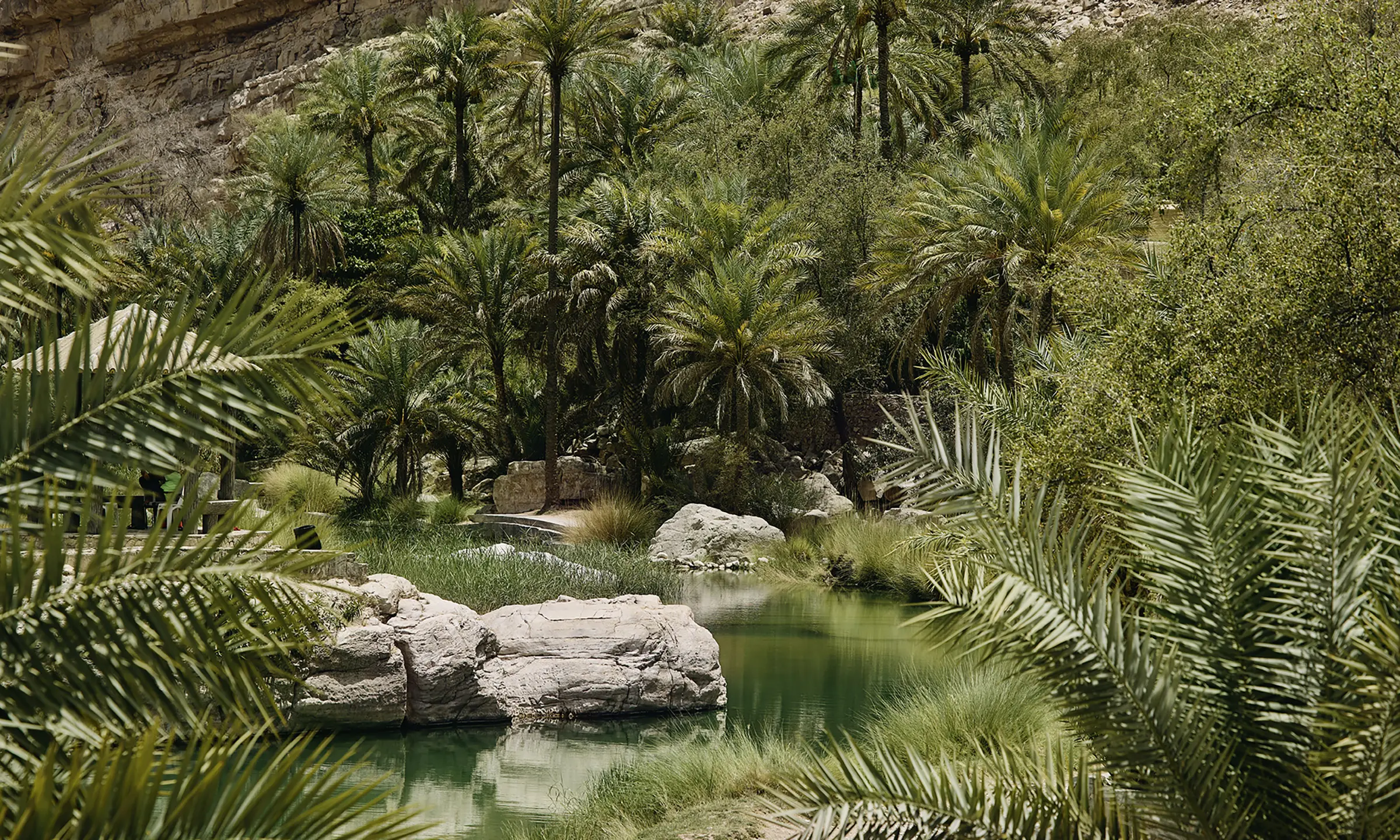
Each lies at the bottom of a rocky gorge that has been washed out by erosion. Luckily, it’s just a short walk through the heat. Feathery green palms come into view, casting shade like in the South Pacific. Ripe yellow dates hang in the treetops. Then we see our salvation.
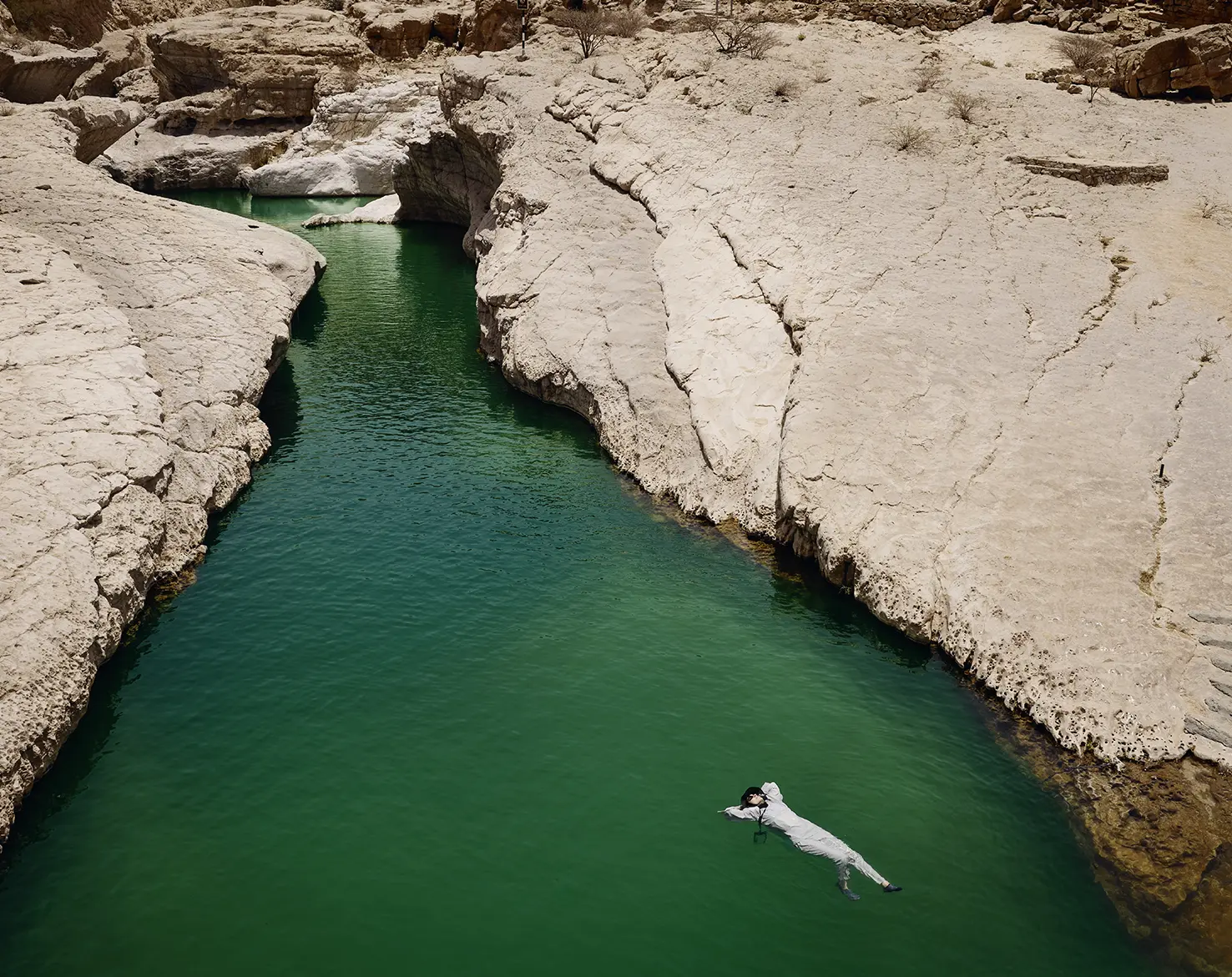
Pools and small lakes of crystal-clear water have formed down below, their green and turquoise surfaces shimmering full of promise in the sun. We spot lagoons and beaches like on Bora-Bora.
We climb onto a boulder. Mustafa says he’s pretty near core meltdown. Oman, land of fairy tales. But this one is for real. We decide that it’s probably 50 degrees in the shade by now – and below us lies blue paradise. Mustafa jumps, and we follow close behind.
Oh, blessed oasis. A miracle! A swimming hole in the desert.
Pools and small lakes of crystal-clear water have formed down below, their green and turquoise surfaces shimmering full of promise in the sun. We spot lagoons and beaches like on Bora-Bora.
We climb onto a boulder. Mustafa says he’s pretty near core meltdown. Oman, land of fairy tales. But this one is for real. We decide that it’s probably 50 degrees in the shade by now – and below us lies blue paradise. Mustafa jumps, and we follow close behind.
Oh, blessed oasis. A miracle! A swimming hole in the desert.