












55° 52' 01.4" N4° 15' 23.7" W
Women play along to hard rock and young people dance to popular pipe bands. The bagpipes have always been a part of Scotland, but now they’re reinventing themselves with a loud sound that is taking us back to the future!
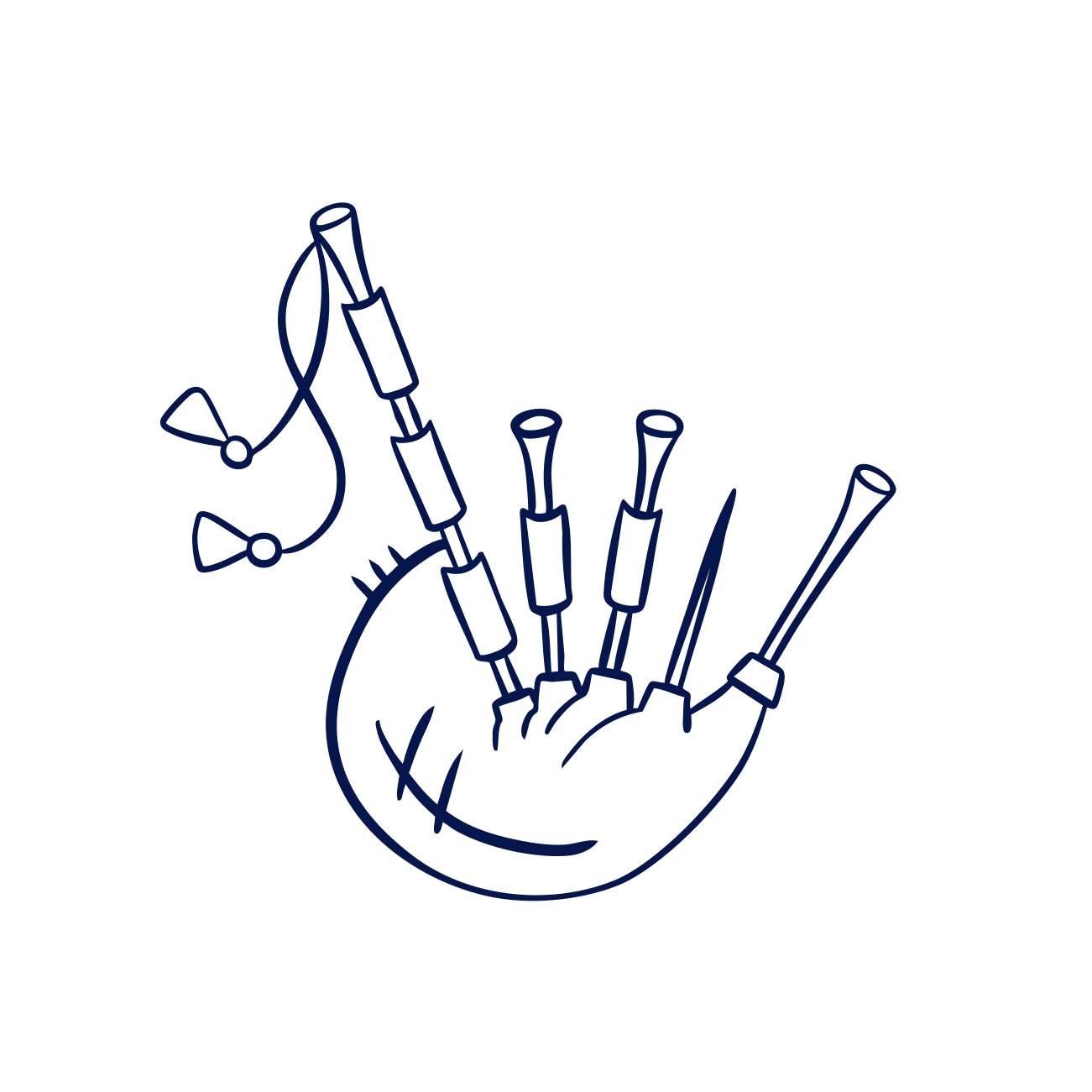
You don’t have to be in Scotland long before you hear the sound of the bagpipes. On this particular morning, the clouds are heavy over Loch Lomond when suddenly the distinctive sound of three pipe drones echoes through the idyllic Scottish landscape. This is the skirl of the Great Highland Bagpipe, the classic version of Scotland’s national musical instrument.
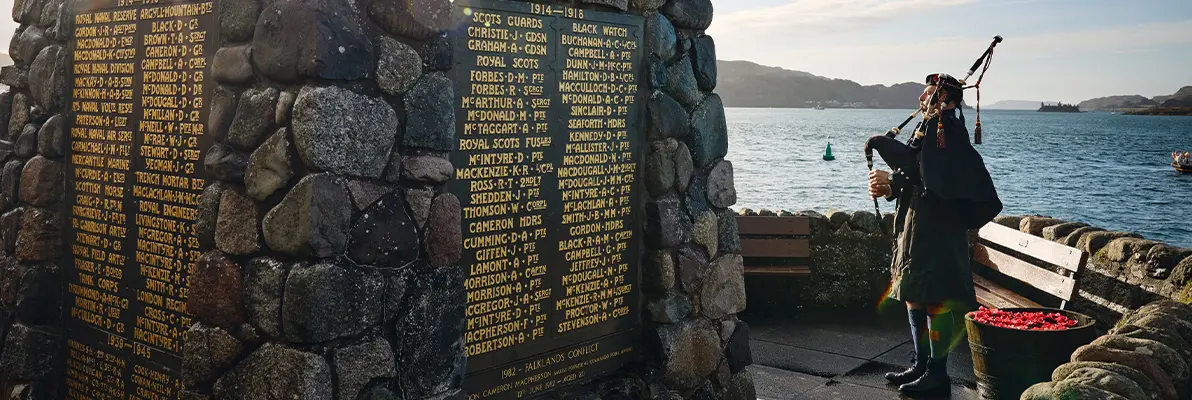
There’s always someone somewhere in Scotland playing the bagpipes!
Our journey continues west. Remote inlets such as Loch Long and the Sound of Bute cut deep into the landscape. Ancient bridges stand amid peat-covered hills. Mist drifts over rivers and castles rise from tiny islands. The following day brings the full Scottish musical experience. The old harbour town of Oban, the gateway to the Hebridean isles, is marking Remembrance Day.
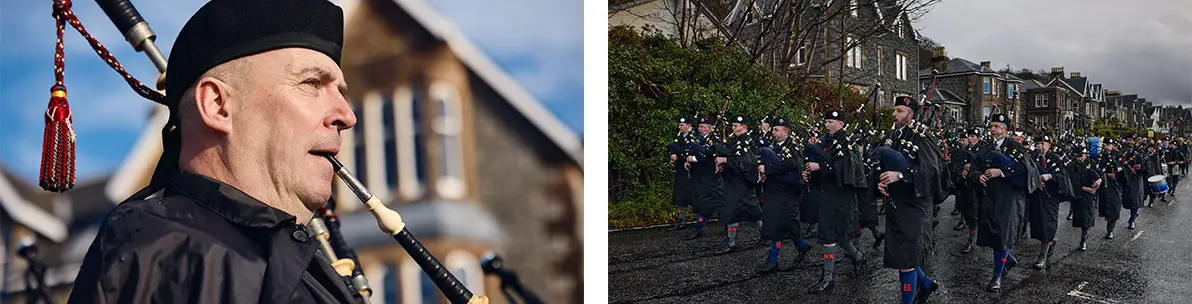
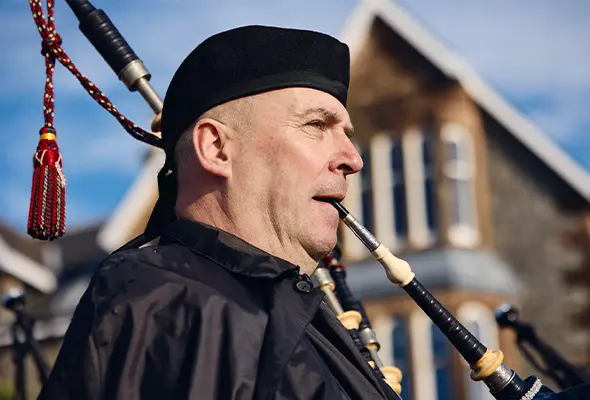
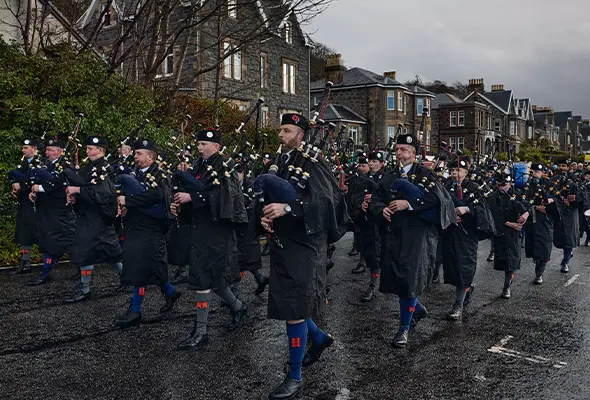
Members of multiple pipe bands gather in front of the Corran Halls. At precisely ten o’clock, they march along the esplanade to the war memorial at the entrance to Oban Bay. Taking part are around a hundred pipers! The music is dignified, solemn and majestic. The people march in silence. Some of them are moved to tears.
An ancient Scottish instrument? Not quite!
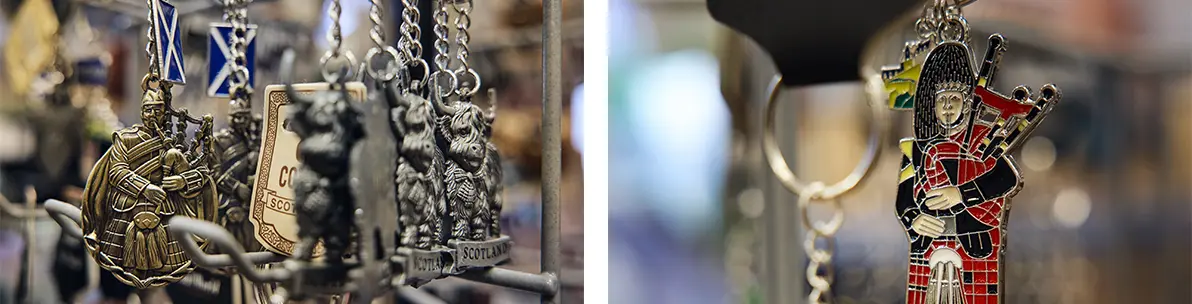
Bagpipe music can be heard all over Scotland – at parties, on memorial days and during official ceremonies. The three drone pipe has become the calling card of Scotland. You can buy bagpipe-shaped key rings in souvenir shops and pictures of distinguished-looking pipers decorate biscuit tins, hip flasks and hotel lobbies.
Interestingly, the bagpipes do not actually originate from Scotland. Their predecessors were played as far back as ancient Egypt, before the Romans spread versions of the instrument throughout Europe. Farmers would play the bagpipes at parties and shepherds used their loud tones to scare off wolves.
By around 1400, the pipes with their leather bag had become a popular instrument in the UK and had also found a place in the military, where their sound accompanied marching troops. But history is a complicated matter. The Scots revere the instrument’s traditions, but they’re not afraid to pipe up against them either.
Giving it laldy on the bagpipes

Is this really a town that knows how to let loose? Yes! The music is already playing in the pubs.
Oban in the evening. The esplanade is wet and fishing boats are moored along the quay walls. At times, the soft clacking of our suitcase wheels on the rain-slick kerbs and cobblestones is the only sound. It’s already getting dark and the night is cool. However, not far away, outside a small basement bar, a queue is forming.
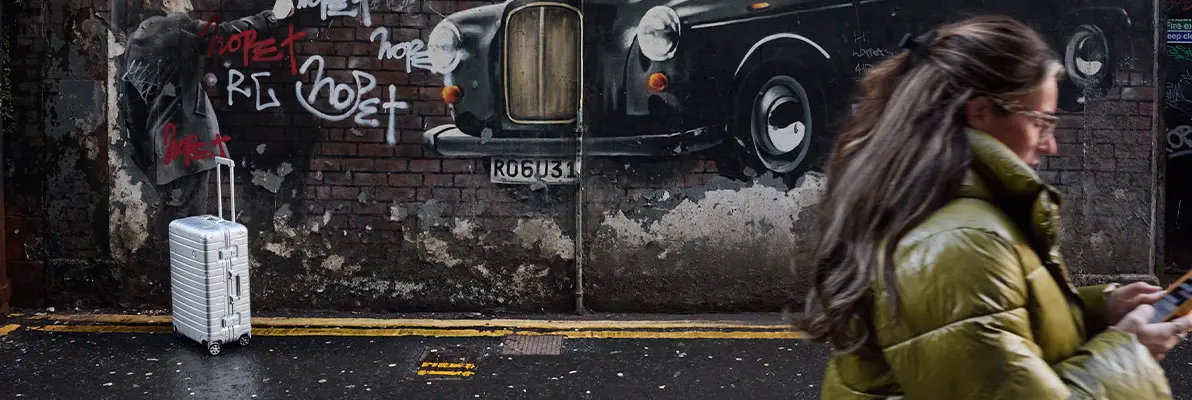
Our case takes everything in its stride. Even the streets of Scotland, which seem to be wetter than anywhere else in the world.
In Markie Dans there’s live music every weekend. The band kicks off at ten. Two guitars accompanied by the nasal drone of the bagpipes. Less than fifteen minutes later and the place is jumping. The customers are dancing fast jigs and wild ceilidh dances that make the rafters shake.

A young audience, a wild evening. The bagpipes are definitely not seen as outdated here.
The dancers are young. Women in sneakers, men in jeans and boots. The music sounds fresh. Modern folk rock instead of arm-linked swaying; country punk instead of marching tunes. The traditional bagpipes are reinventing themselves.
Virtuosos in the music capital
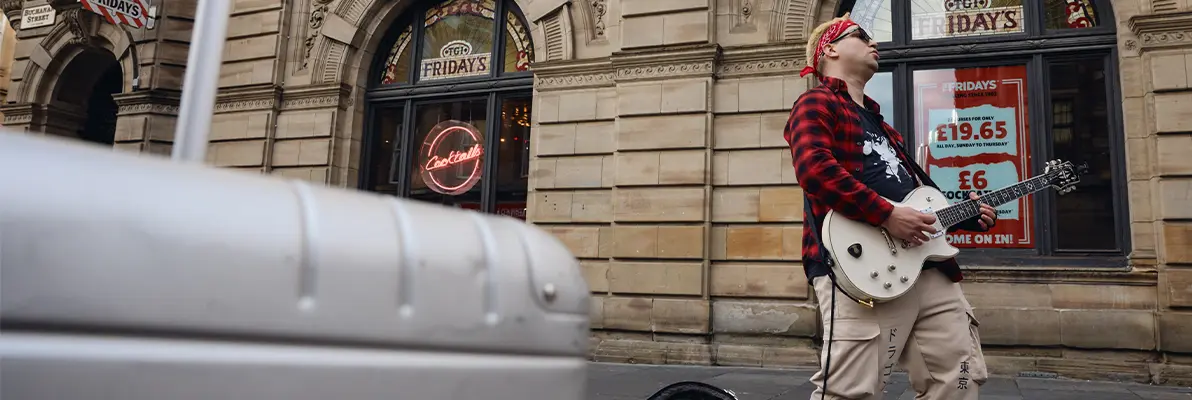
Glasgow is where the music’s at.
To see this musical reinvention in full swing, you need to head to Glasgow. The area around Glasgow Central station is buzzing. There are coffee shops, galleries and tattoo studios. And music everywhere! The pubs in the city are full. Fiddlers and guitar players are surrounded by dancing customers and in the middle of it all are the bagpipes.
Just a mile up Hope Street, there’s an institution with its name in golden letters above the door: The National Piping Centre. The beating heart of Scottish bagpipe music.
Bagpipes hang in the windows and upstairs there’s a concert hall. Step inside and you’re immediately enveloped in music: Mixolydian scales and Celtic melodies drift up from the practice rooms in the basement.
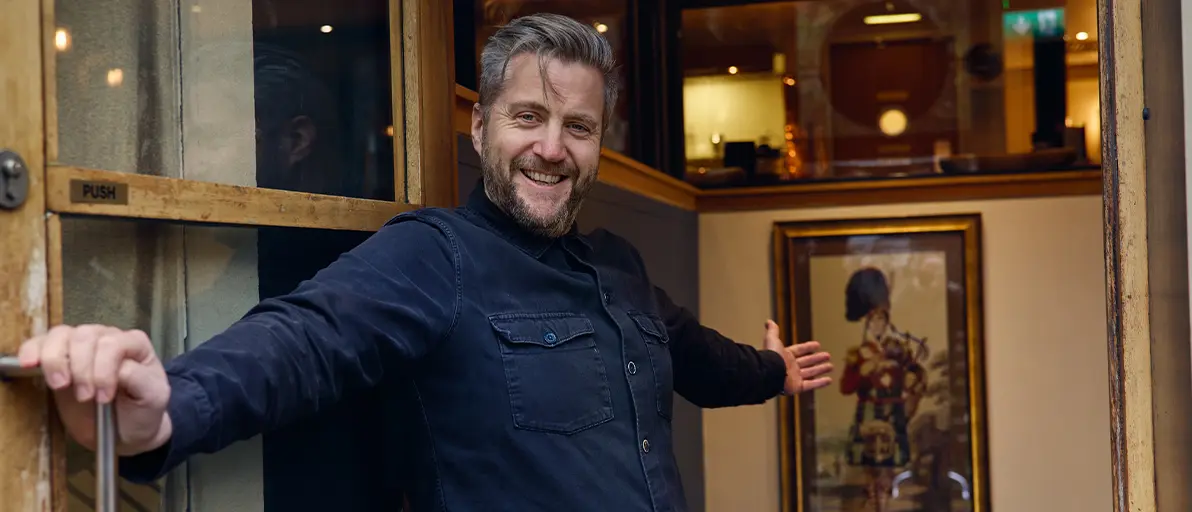
Finlay MacDonald: piper extraordinaire
And then Finlay MacDonald comes down the stairs – the George Clooney of the piping world. He’s 49, with dark-grey hair, and is dressed in jeans and a dark shirt. He would never say so himself, but MacDonald is one of the best pipers in the UK
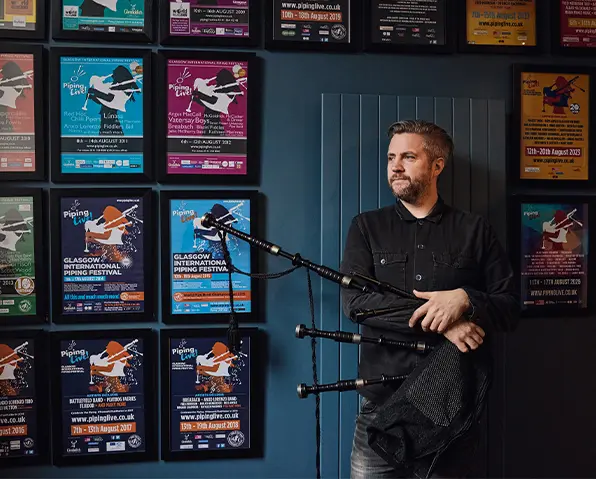
“It’s amazing, the places this instrument has taken me,” he says. China, Japan, Canada. India, Thailand, Africa. There was always a concert somewhere or a guest appearance lined up. And although hardly anyone realises it, the whole world plays the bagpipes! Travelling has since become part of MacDonald’s life, thanks to music.
The National Piping Centre recognises the importance of preserving traditional styles, while remaining open-minded enough to bring the music into the modern age. As MacDonald puts it: “Leave the frame, don’t stay safe.” It’s just like life itself: “If you don’t try anything new, you will wither.”
A piper on the world’s biggest stages
In the afternoon, Finlay MacDonald is sitting in the practice room unpacking his instrument. Playing a solo on the bagpipes is an art in itself. MacDonald’s fingers fly across the eight holes of the chanter, bending the notes and finding the embellishments. Creating the magic of the music.
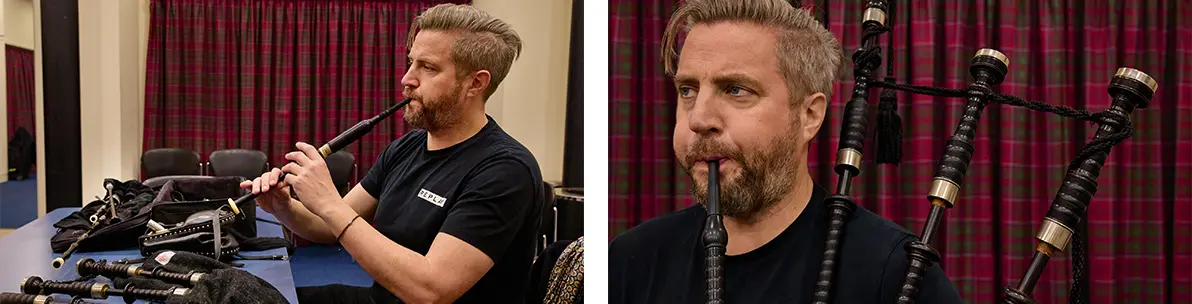


MacDonald’s prowess on the bagpipes has impressed many people. He’s played with Bryan Adams as well as world-famous rappers and rock bands. He composes many of his own pieces and has performed with the band Biffy Clyro at Scotland’s largest music festival, where 60,000 people went wild as he let rip on the bagpipes.
Scotland’s newest bagpipe stars are women
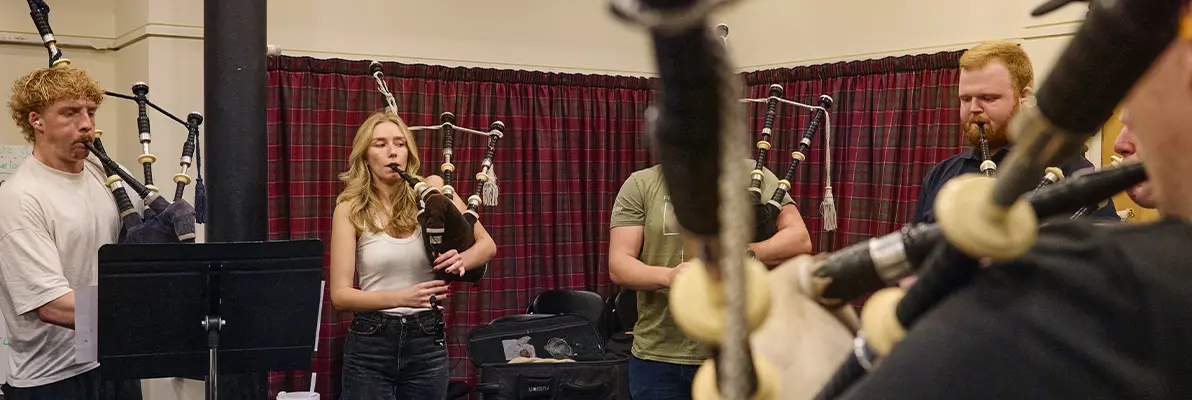
The next generation of pipers is here – and many of them are women like Anna Smart.
The next evening, there’s a concert at the Centre. And it’s not just men playing the national instrument. The number of female pipers is growing fast. Among the musicians getting ready for the performance is Anna Smart, one of the most talented female pipers in Scotland.
She began playing at the age of six. Ten years later, she was already playing in one of the country’s best-known bands. Smart also learnt the traditional playing methods, but then a new era dawned. Now 26, she’s joined The Rollin' Drones, a band bringing the bagpipes into the world of pop and rock.
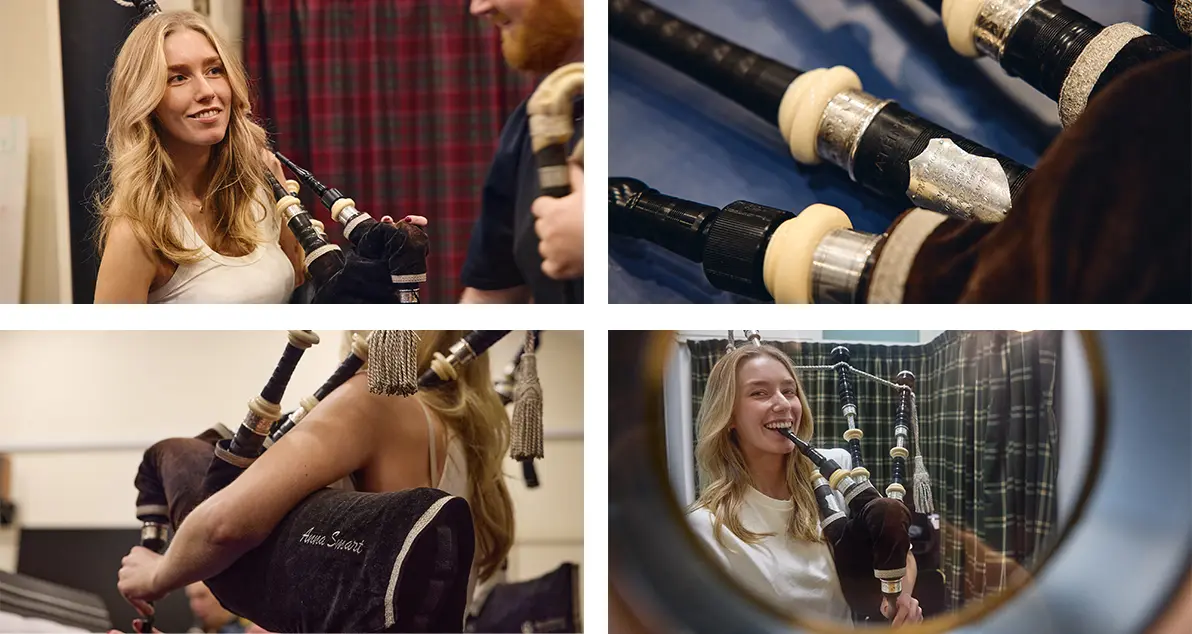
She also plays with country musicians and bands such as The Laurettes, an all-female group, rocking out on her pipes wearing cowboy boots and a mini skirt.
“The bagpipes are shrugging off their old stereotypes,” says Smart. There are currently quite a few bands using the pipes in genres such as rock, pop and even heavy metal: The Red Hot Chilli Pipers and Drums N’ Roses, to name just two
Loud, Scottish and damn cool

Emma Hill is just 23 years old and already a professional musician.
For passionate piper Emma Hill, music is a living language. The 23-year-old graduated from the Royal Conservatoire of Scotland with a degree in classical music. Today, she makes a living from music and is one of the young women breathing new life into Scotland’s bagpipes.
“It’s a versatile instrument,” says Hill. “I like the old marches and laments, but the bagpipes also go really well with modern music. You can hear them straight away, as if they want to say: Listen up! Here I come!”
Hill has already played at Dior fashion shows and performed with soul and pop singers. She formed a trio that combines traditional Scottish music with jazz and regularly teaches in underprivileged areas of Glasgow. Kids love the bagpipes. They’re loud, Scottish and look damn cool.



In the early evening, she poses for a photo shoot in a Glasgow subway station. Of course, with her pipes. The walls are covered in graffiti and Hill wears boots and a leather jacket. Gradually, passers-by stop, turn and listen. When Hill begins to play, the music fills the whole tunnel.
It almost sounds like a fanfare. Listen up, folks – the times they are a-changing.